

The Worm Lady Puts Down Roots
An interview with Taylor Lyons Vaughan
by Jude Theriot
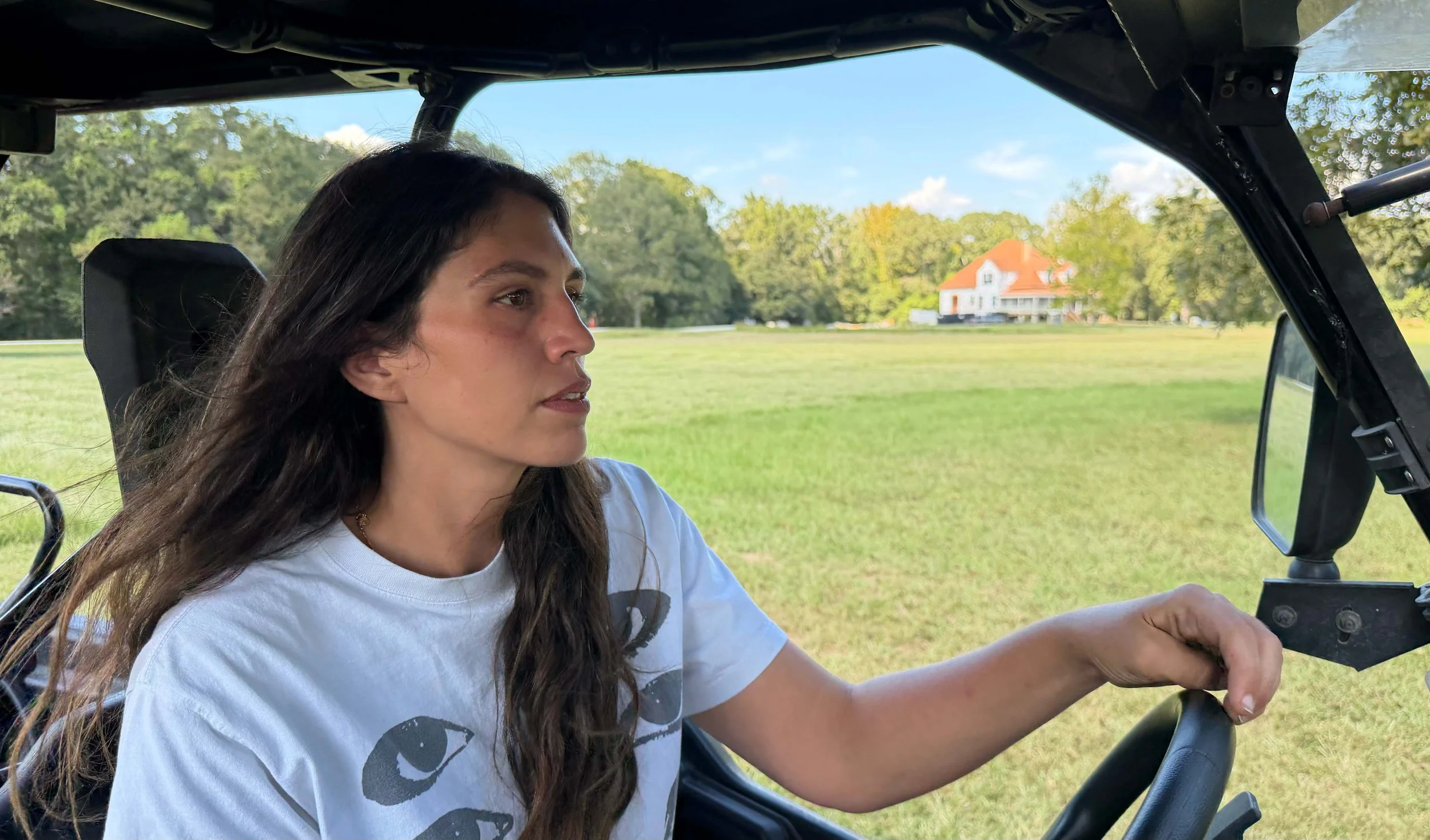
Taylor Lyons Vaughan
She thought relocating her worm farm from Lafayette Parish to St. Martin Parish would be simply a matter of moving a few miles east. “It’s different here,” she reflected, searching for words to fit the feeling.
Taylor Lyons Vaughan, also known as the Worm Lady, had no obvious model for the life she would build. Growing up, she knew no women farmers, and she started out with, as she puts it, “no money and no land.” Yet she has managed to establish a small utopia on the banks of Bayou Teche in rural Parks, expanding her farm beyond its staple of worm farming to include milk cows, sheep, a vegetable garden, a formidable composting operation and a greenhouse filled with ornamentals and edibles. That isn’t to say farming is all bliss.
Anyone who has dipped even one toe into the world of farming knows the work involved—the early mornings and late evenings, the vagaries of weather, plagues that can decimate a crop, not to mention the financial surprises—but when it’s working as it should, a farmer willingly trades all of that for a reward of another kind: a life lived close to the earth. Belief is easy. It’s easy to believe in recycling and sustainability and living lightly on the land. Vaughan does the day-to-day work of putting those ideas into practice.
The farmer, mother and entrepreneur has naturally stepped into the role of educator as well. Interest in her practices has spread outward into the community as her own roots have grown deeper into the soil. People wanted their own worms. They wanted cabbage and compost and holy basil, too. Through her Better the Earth Fest and educational outreach, including field trips at the farm for homeschoolers, she has begun teaching people about worms and plants and farming, inspiring the next generation of children—for wonder hews closely to the surface of the earth. After all, who among us, adults and children alike, would not relish an afternoon on this Bayou Teche farm, plunging both hands into a kiddie pool filled with dirt, examining the honest work of those squirming red worms?
Worm Farm
How did you get started in worm farming?
We used to be based in Lafayette. That’s where I started, at my home, and we were just a worm farm. I really was into making more recycling options available in Lafayette and Acadiana. They had plastic recycling, but that was getting sketchy, and they had leaves that you could put into your rows, but there was no paper recycling, so I was like, “Well, worms eat paper. Worms eat leaves.” I made drop offs around Lafayette, and a couple of businesses around town, and we’ve been doing that for, like, seven or eight years.
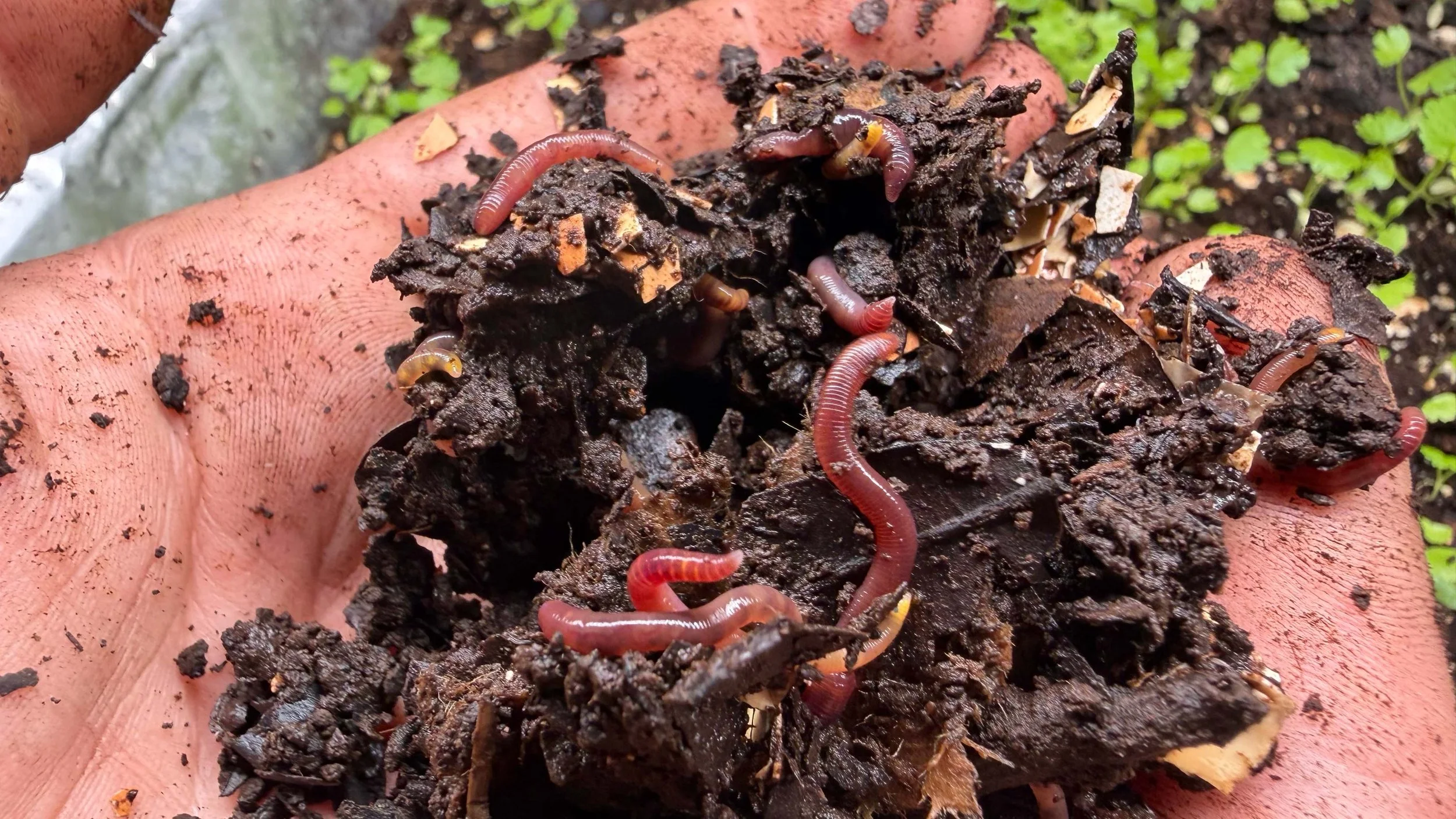
Red worms
What do people drop off?
Paper products, brown paper only, like toilet paper rolls, paper bags. We do cardboard from restaurants. I don’t have a big enough shredder yet. One day, hopefully, whenever I have, like, a huge composting facility. It’s always been the goal that I could take more paper, bigger cardboard, because so much cardboard just gets thrown away, when it could be recycled and put back into the earth, and not just recycled into more cardboard.
So you've been doing worms for seven or eight years, and just moved here to Parks? It’s gorgeous back here.
It’s amazing. This is 25 acres, and then there’s 25 acres of woods next to it, so it’s a really good system. We can say that our farm really gives back to the environment.
When you were looking for a place to move to, what were the things that you were looking for?
I had a garden in Lafayette behind Tops Appliances. It was a parking lot that had turned into a garden. Then a different company bought it, and they needed it back as a parking lot, and I didn’t know what I was gonna do. I also had another area in Lafayette with my big greenhouse at a different property, with sheep on it, and that property was kind of for sale, too. And then I just happened to meet these people by accident, and they were like, “Oh, we have a farm that isn’t a farm yet, but we would love for someone to help us.”
And these are earthworms?
So these are red worms, and I use red worms because they eat waste really efficiently compared to earthworms.
What else do the worms require to thrive in this environment?
They take a lot of temperature changes, but they can’t be above 90 degrees. If they stay at like 73, 78, then I can keep them breeding constantly. This is my breeding room. I collect the castings from here also. And then during the winter, I'll have bigger piles in the greenhouse, and then they can eat all the way through it and make a massive pile of castings.
And castings are what?
Castings are the worm poop, and that’s what we harvest with that machine right there. I can show you. So we collect the poop, and then we sell the poop, or we use it for our gardens. And then we sell the worms to other people who just want compost on their own. Or, like, I’m having a class this weekend, and it’s seven families who are gonna come, and they’re gonna make their own little worm bins. See those little buckets? They’re gonna go home with their own worms, and then they will be able to feed them every week, the food waste that they waste out of their fridge, and then collect their own worm castings. Kind of like a living trash can.
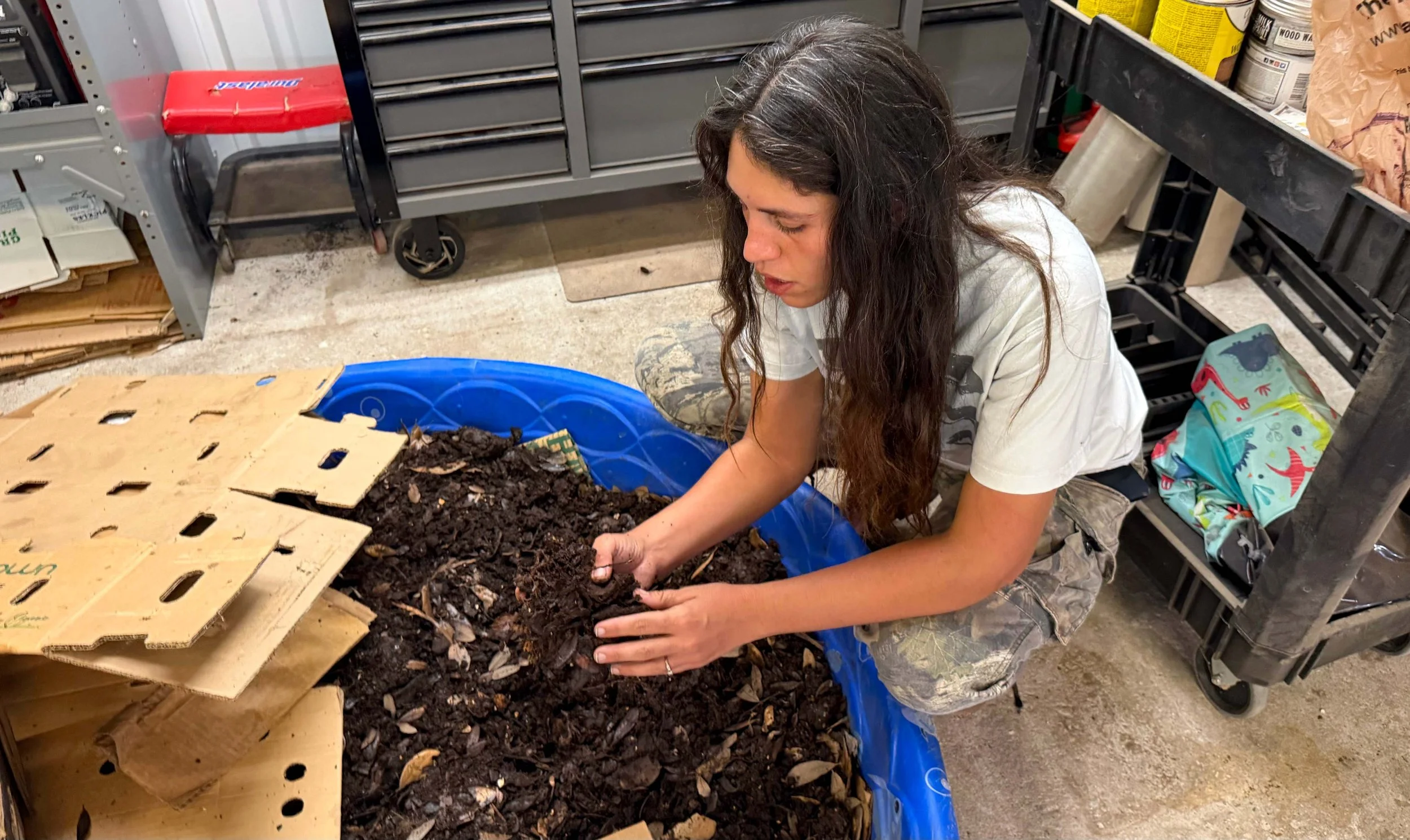
Taylor Lyons Vaughan examining the red worms breeding in a kiddie pool
How are red worms different from earthworms?
Earthworms are tunnelers. Red worms live more on the surface. They’re originally from Europe. They wouldn’t normally eat food scraps. We just figured out that they would eat food scraps. They’re not native to this area. Earthworms are native here. The red worms come from Europe.
So where did you get these worms?
I ordered these from a different farm, like in Idaho originally, or in South Carolina. No one locally had any, so I bought them, and then I started figuring it out in my shed doing different experiments. What could they take in our environment? How can I make them thrive there? And so now I pretty much breed all the worms that I need.
The breeding just takes care of itself?
Pretty much, they will double in population every three months as long as they’re in ideal conditions. And that’s why if I keep them in here, I can keep them breeding. But even outside, if you do it correctly, they’re gonna lay eggs. They lay eggs, yeah, that's the best part.
If they keep breeding, you keep getting more and more worms, and then what do you do with all those worms?
I’ll separate them and then I’ll sell them. And when people come to the class, they get to go home with their own worms. So I need a constant supply of worms. That way they don’t get too old, because their lifespan is two to three years, let’s say. But the fresher they are, the more energetic, in terms of breeding. So you always want fresh worms. We have them in all these containers. They can be in metal. [She slides a kiddie pool out from under a shelf.] But this is kind of how it starts, right? A lot of leaves. This is probably midway. And we have finished product over there.
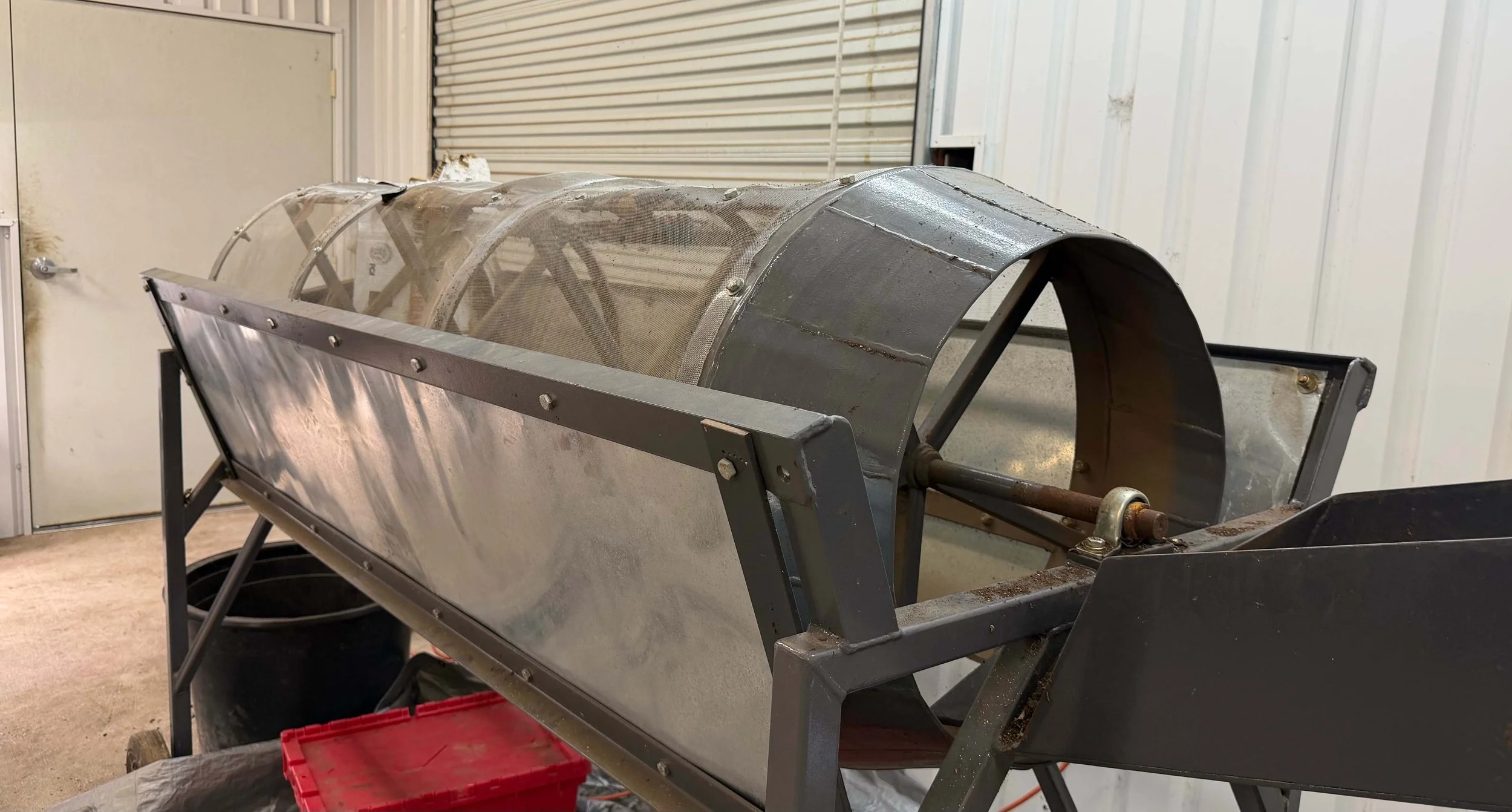
Sifter
[We walk over to the sifter.]
I kind of just put them in here, and the castings fall through the bottom, and the worms fall right here, and then we would collect the worms and start again. The finished product that we’re really trying to get is hard casting. See this nice texture? A good test is if I can squeeze it into a ball, and then break it up easily. It doesn’t have a bad smell. It’s full of life. It can soak up water really easily, and a little bit goes a long way, so you just need a tiny bit for each seed or a handful per plant. The point of worm castings . . . it’s not an excess amount of nutrients in here, but it’s a lot of life. You’re adding a lot of life to your soil, which is really important.
And this is a product you sell?
This is the product that you want. Yeah, this is what I sell. This was the first thing that I sold. And then I realized, OK, let’s sell the worms. And then people said, “Oh, well, do you do classes?” So I said, “Okay, let’s do classes.” Then I was like, “Well, the plants are growing so good. Let’s do a nursery.” So I did a nursery, and then I moved into growing food. Then the sheep and the cows.
What quantities do you sell?
We have one pound for $10, two pounds for $16, five pounds for $32, ten pounds for $45, and twenty pounds for $65. Twenty pounds is about a four-gallon bucket. And a little bit goes a long way, so it takes a long time to make, probably, like, a year from start to finish. If you’re counting, also, remember we needed to collect all the food from the grocery stores so that we could make the hot compost piles outside, then make that compost, and then that’s what’s used to feed the worms mainly. Then you add in the paper and the leaves.
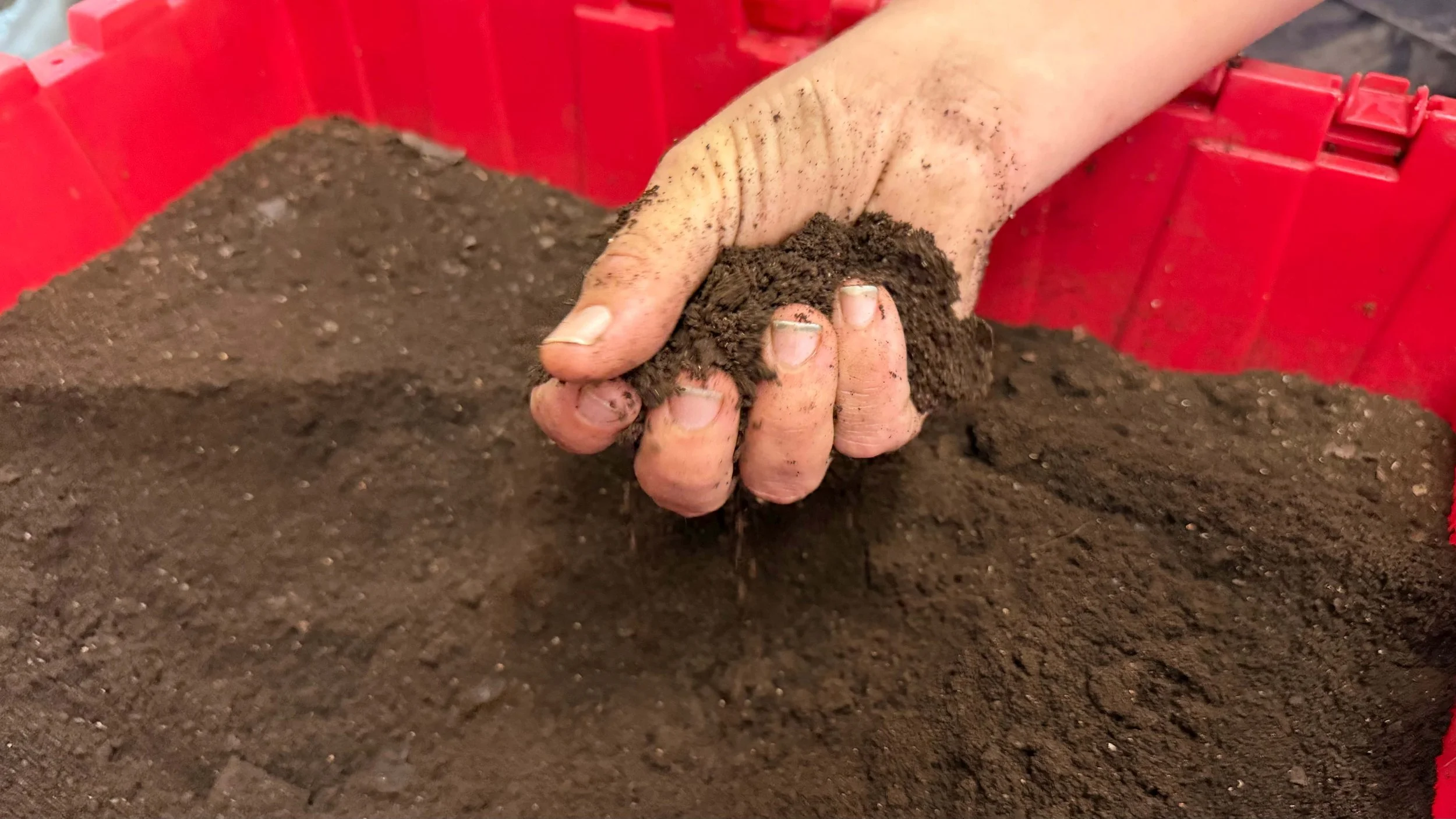
Worm castings
So they need more than just paper to eat?
Right. You’re adding the food weekly or bi-weekly, you know, the fresh food, such as lettuce or something without seeds. Now if you’re doing it at home, go ahead. You know, you’ll have seeds in your castings, but it doesn’t really matter. But if I’m doing it here, I’ll use, like, lettuce, grapes, you know, maybe some watermelon rinds, things like that. Anything without seeds. And no citrus. No oranges, pineapples, their skin is kind of sensitive to the acid.
If somebody was doing this with a bucket at home or they just had a pile, they would need some kind of device to get the castings out?
If you don’t want to lose your worms. I do have a smaller one that I used to use before I got this one. It’s made out of PVC pipes and a five-gallon buckets and a screen, and then you just manually do it. So I show that in the class, the easy one that you can use at home. And that’s what I did for the first four or five years. I got this one, maybe two years ago.
Where do you buy such a thing?
My husband had to design it, and then the shop he worked at let him build it there. So this is one of a kind. Other people sell them online, but they’re really expensive to buy.
Greenhouse
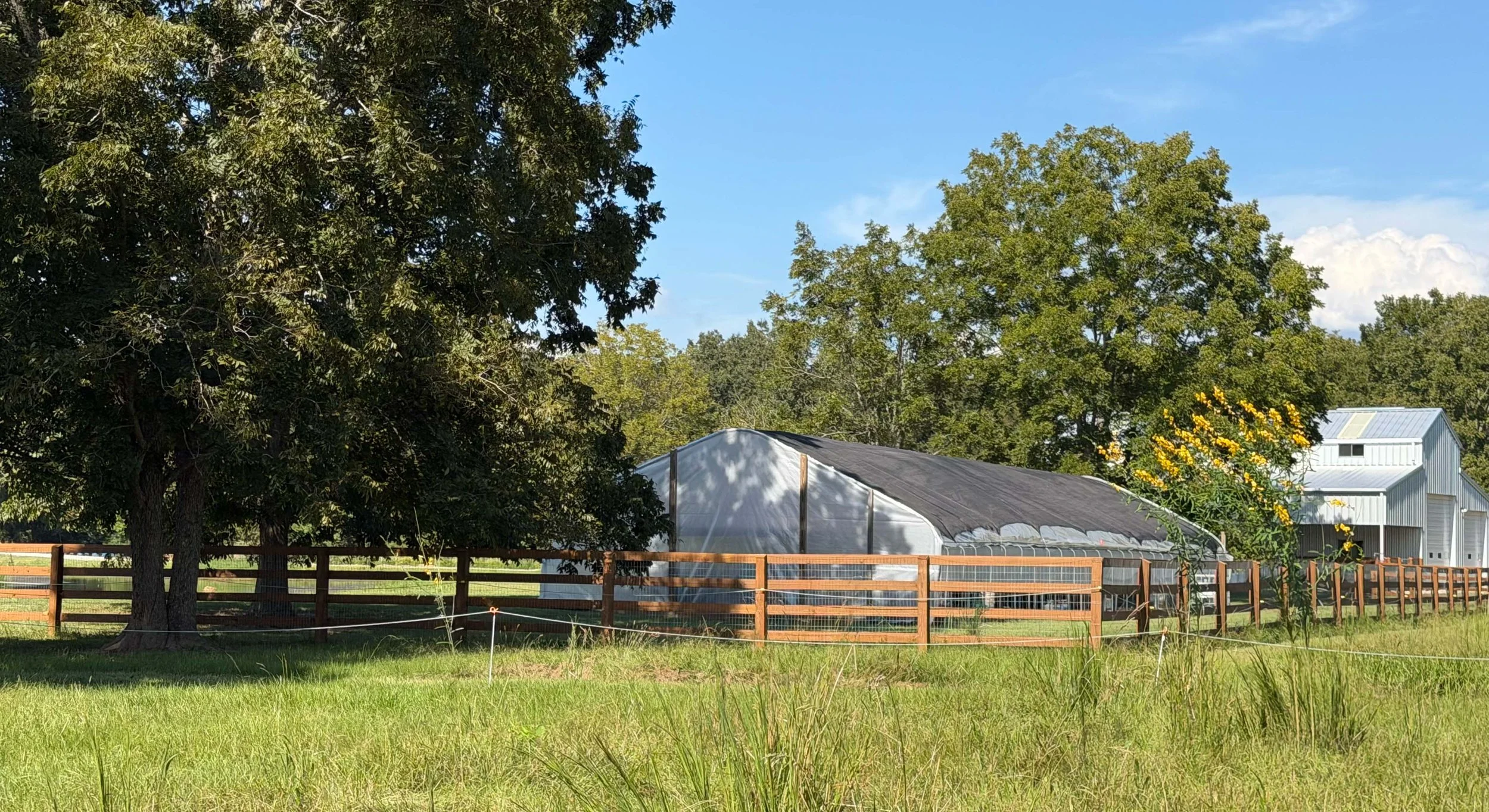
Greenhouse
This is the greenhouse, which I got on a grant. We have a lot of herbs, a lot of natives, edibles. It’s been hot for everything, except for my natives, they can just go and go and go.
What are some natives that you grow here?
I have button bush, mountain mint, over there is white Texas star hibiscus. Here’s the red Texas star. Spotted bee balm. That one didn't come up yet, but I have some right here. And this one is called partridge pea. I really like this yellow. I think it’s so cute. It’s a legume, and it’s one of the touch-sensitive plants, too. See, it’s closing for the night. And then if you run by it, or just water it, they kind of close up when you’re watering it. A lot of the natives are the sensitive plants. I love it. This one is mullein. This is our best selling herb. We sell this both as a plant and as a dried product.
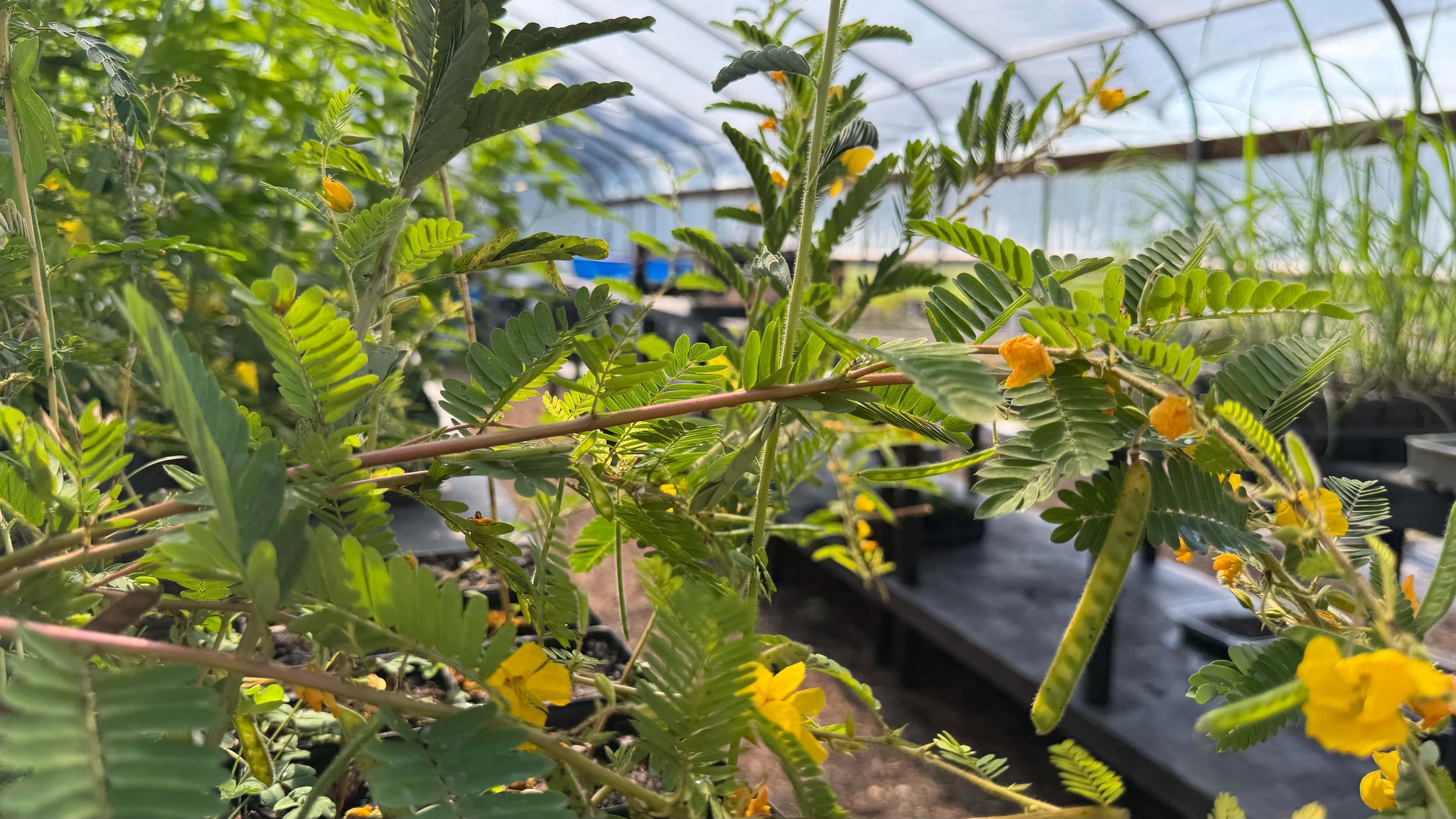
Partridge peas in the greenhouse
Is this the one that people take for respiratory conditions?
For asthma, anything for your lungs. You can drink it in a tea. You can inhale the steam, or you can smoke it. You would dry it first in a dryer, or you could hang these leaves. These are probably easier to hang without having a dryer, I would say. People use it for medicinal purposes. They say it makes them cough up their old mucus, and then their body makes new, clean mucus. Everyone comes back for more. I’ve even had people who have cancer, lung cancer, things like that. I also do tobacco, but I didn’t have a good crop this year. The hornworms kept eating. So I sold a lot of them, but then I didn’t get to grow it out and dry any leaves.
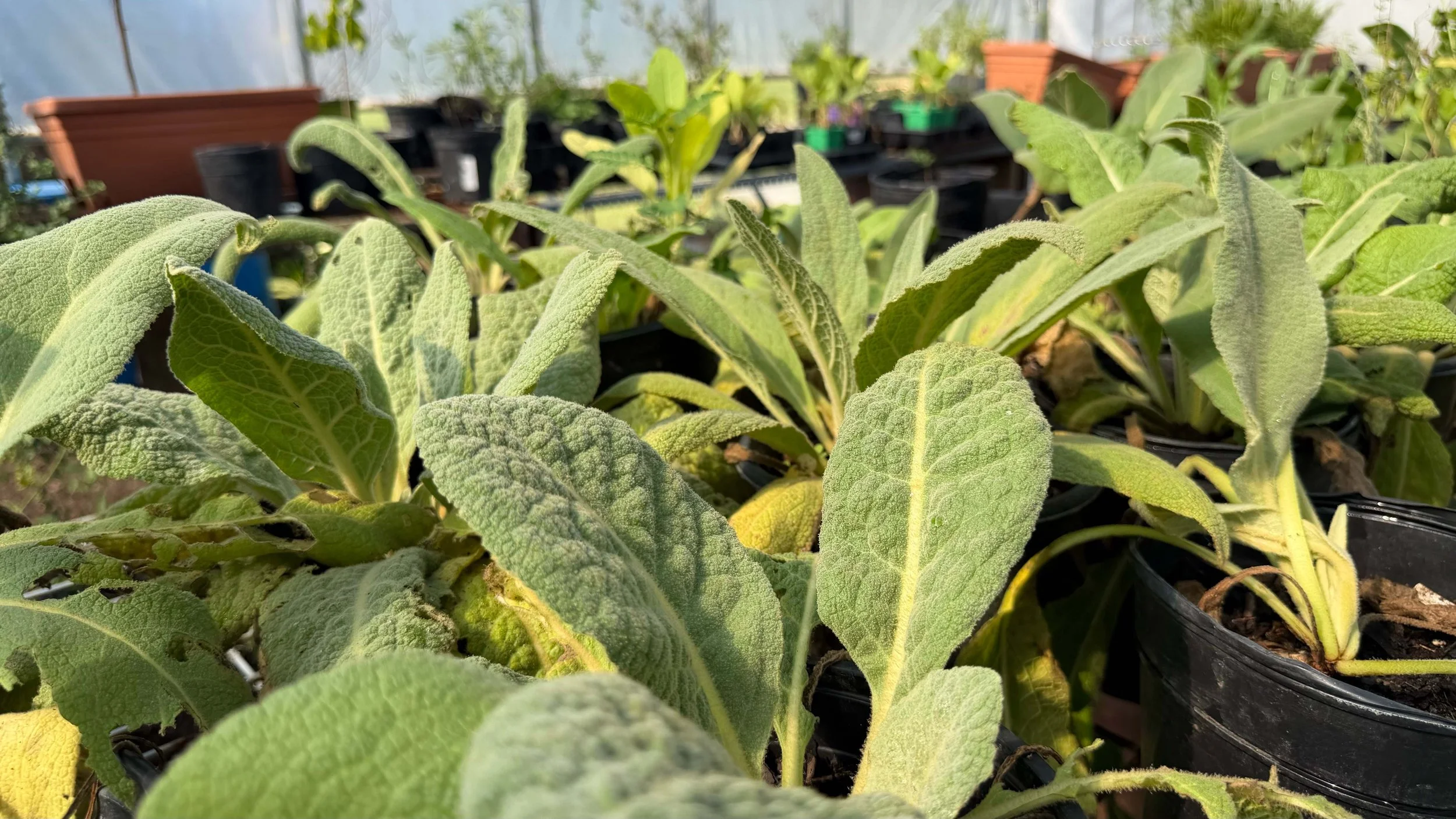
Mullein in the greenhouse
Is the climate generally good here for tobacco?
You would need to do it in a raised bed or a pot, like the mullein. It’s too wet here, but if you have a well-drained area, it’s fine. But the hornworms, the tobacco worms, every chance they get over here. Here’s some milkweed. This is a lettuce that I like. It’s Chinese narrow lettuce, and it does really well in the heat. You can just continue to pick it, and then it continues to grow. So I’ll pick this leaf off. Tomorrow, they’ll have a new leaf. So if I want a sandwich, I just go out to my garden, pick a few leaves, and then it’s still there, instead of having, like, a whole head of lettuce, and then you waste it. And you can cook with it. Beautyberry. Lemongrass. Yeah, that’s my greenhouse. And then in the winter, on the other side will be where my worm piles are. It’s too hot during the summer for the worms. In the winter in here, it stays warm enough and not too cold, and that helps keep my plants warm when I have big piles of dirt, too. And this passion vine right here.
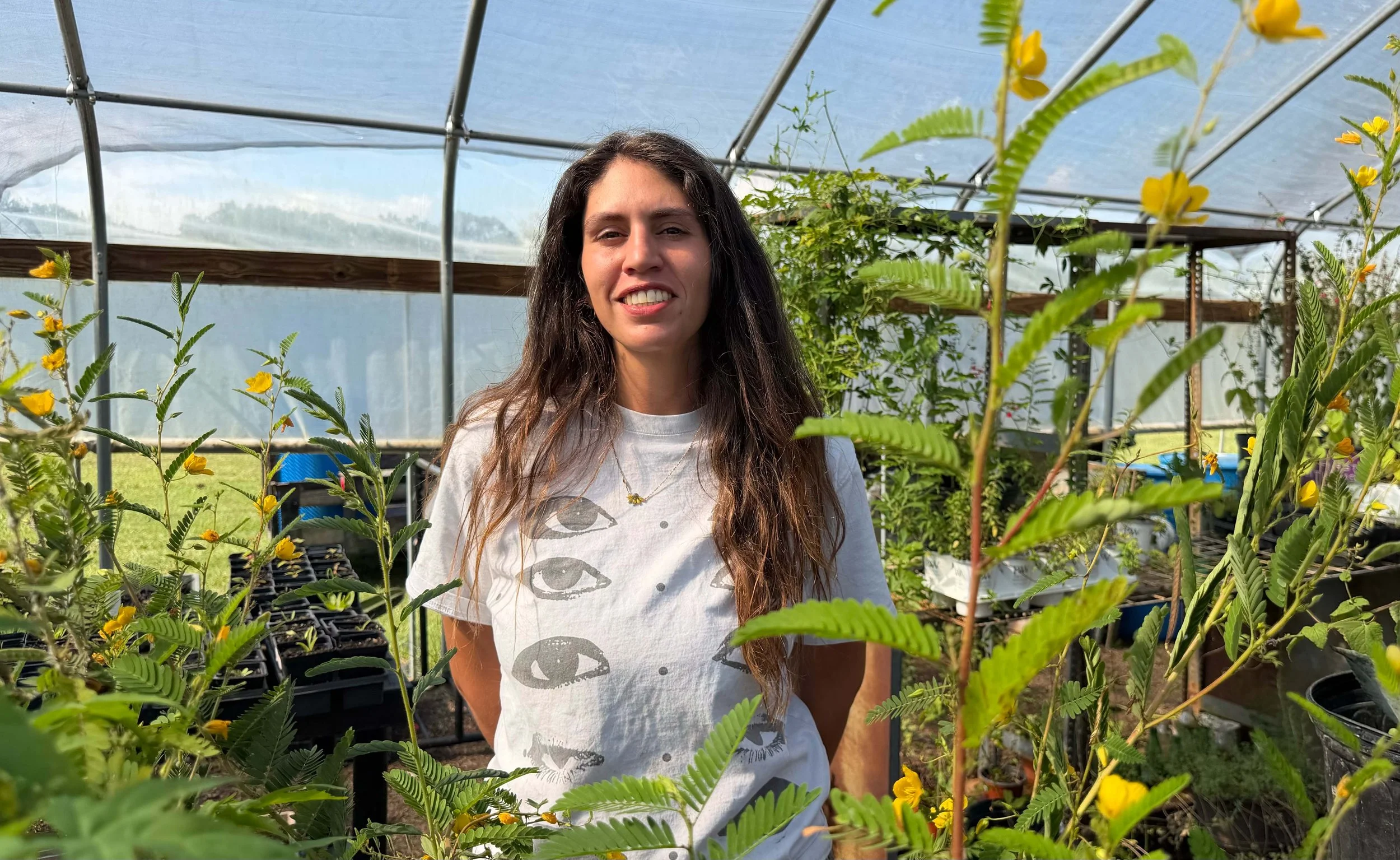
Taylor Lyons Vaughan in her greenhouse
Is that a papaya?
Yeah. I have a couple of papayas. You can make tea from those leaves, too.
Grazing Meadow
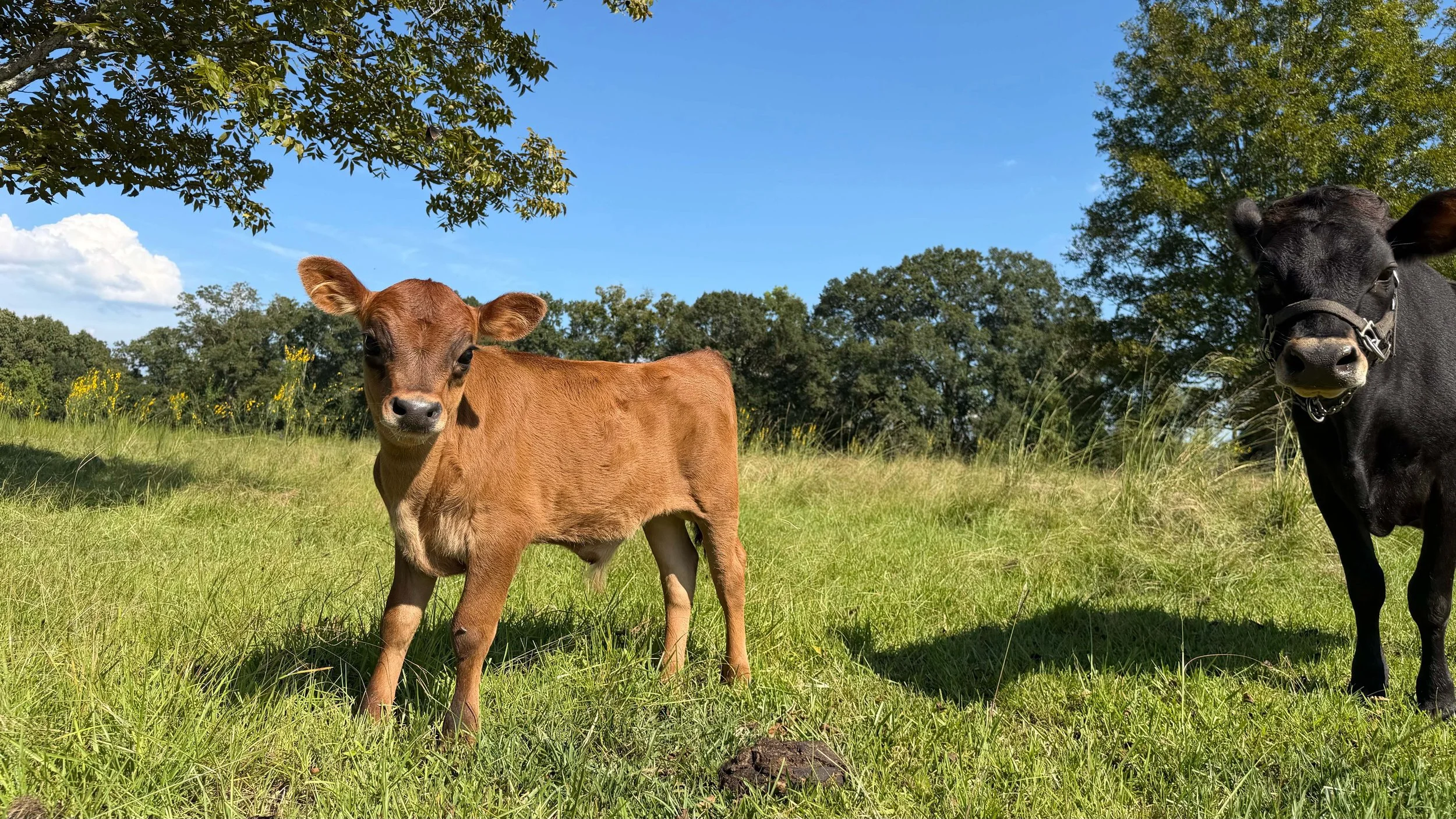
Milk cows, newly arrived on the farm
We got cows whenever we got to this farm. Well, they actually arrived in July, and then we had our first baby in August. And this is really just for milk, for us to start learning for ourselves, and then maybe teach other people since we really enjoy doing the classes.
What’s that flowering plant?
That’s hemp. It’s really good nutrients for them. They also had, like, some beans mixed in. We planted a little too early for when the cows arrived, so then it overgrew slightly. It’s really not hard to milk. I think if people knew how easy it was, they might do it more for themselves. It only takes, like, thirty minutes out of your day, you know? You just feed her some treats, and then you milk her. Yeah, so we run the cows first. They go through each pasture, and then the sheep are, like, a few pastures behind. The sheep eat this tall grass down really quickly.
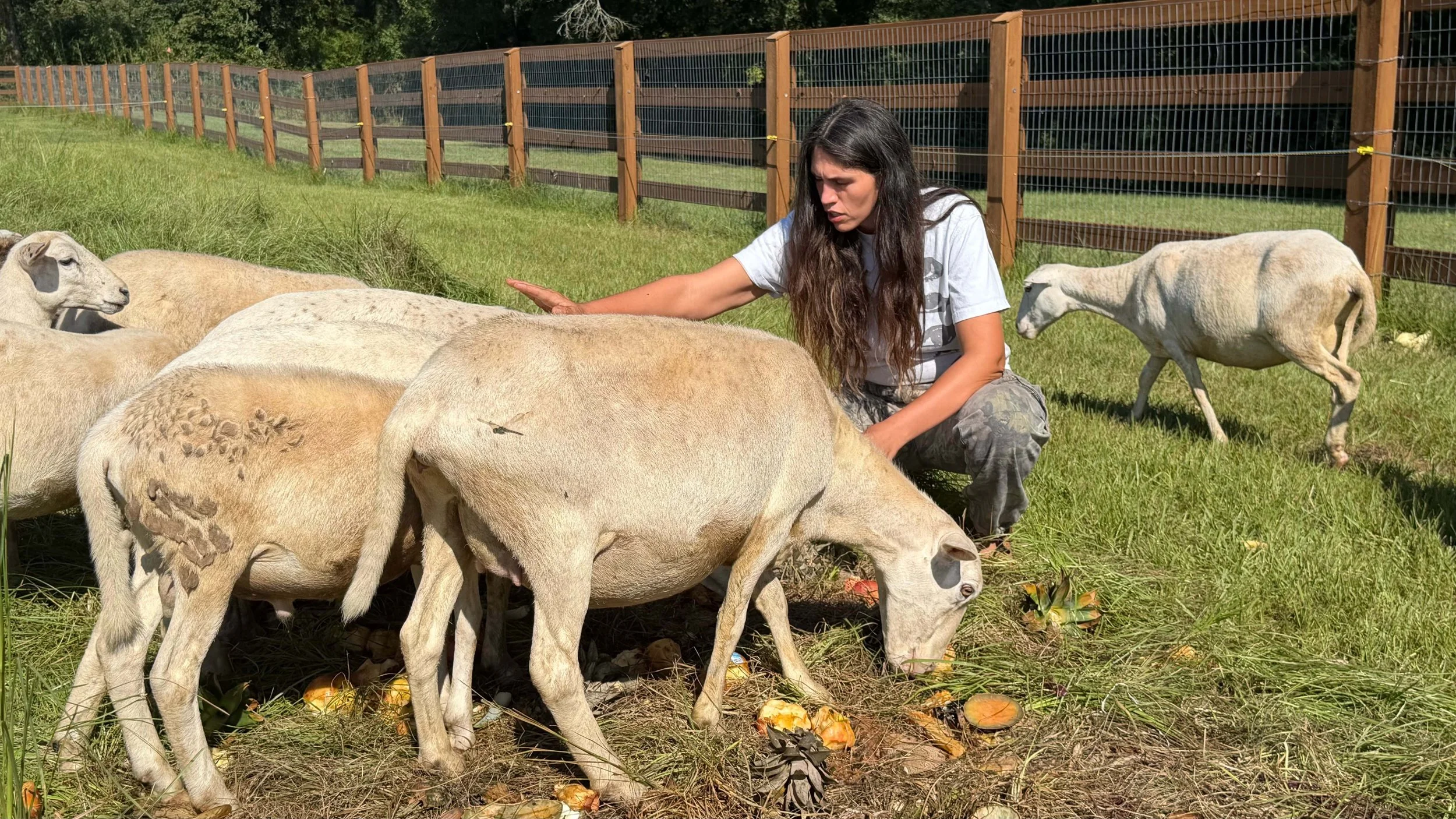
Taylor Lyons Vaughan with sheep
How many sheep do you have?
Fourteen here. And they take care of all of this. You can kind of see the difference, with the field that they’ve eaten. This one is so funny. She’s just, like, different from the rest of the herd, and she knows somehow that she can get extra if she comes by me when all the others don’t. A few of them are pregnant. They shed their own fur, and sometimes I use the fur in the compost or in my garden. All organic. And they pretty much take care of themselves. They're easy. You just have to look after them. Every once in a while, so you know what they do. And then I come, drop the food off. Feeding them the food waste is a lot easier than composting it.
No goats?
No goats. Sheep are already canaille enough!
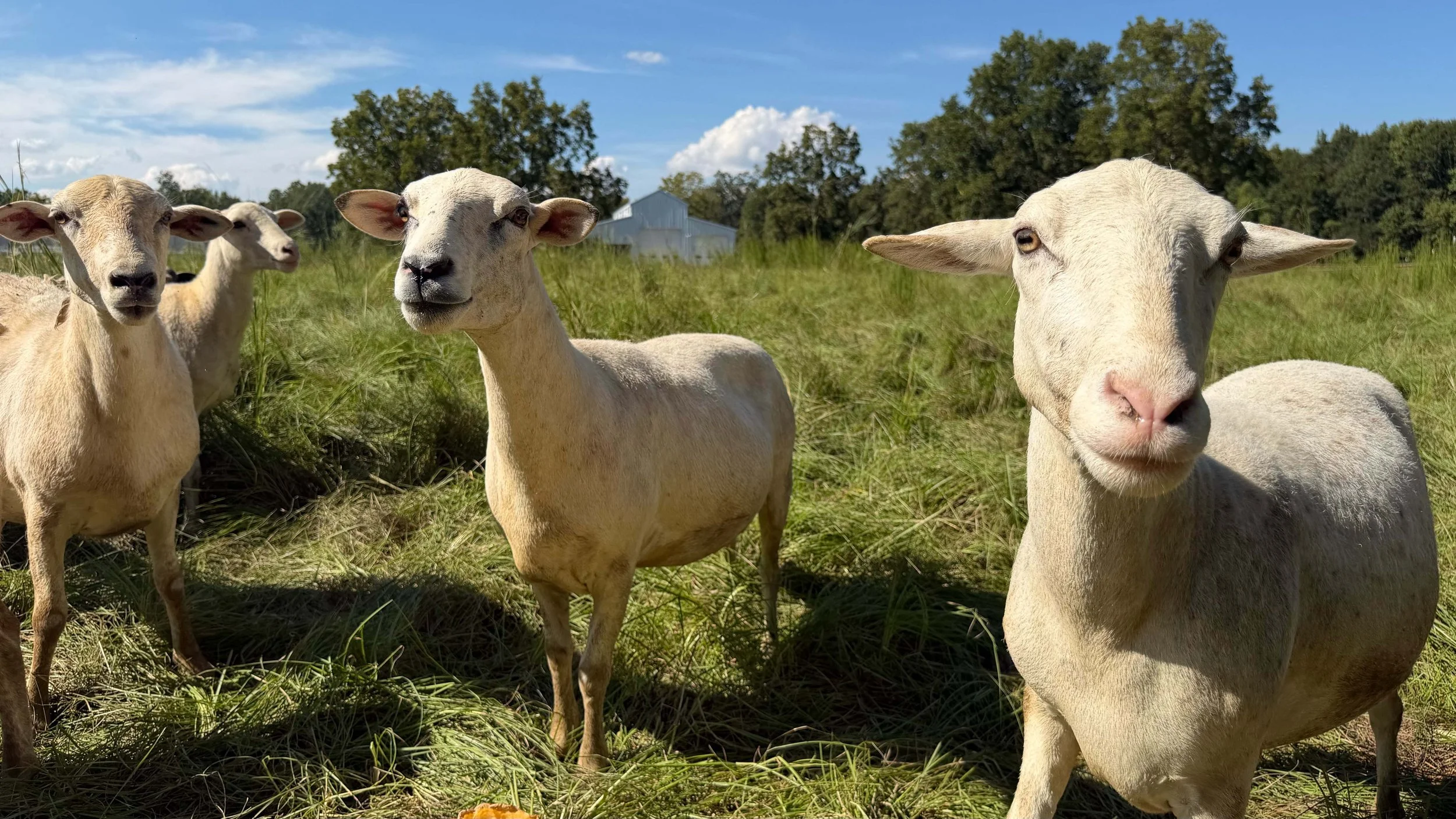
Curious sheep make friendly overtures
Vegetable Garden
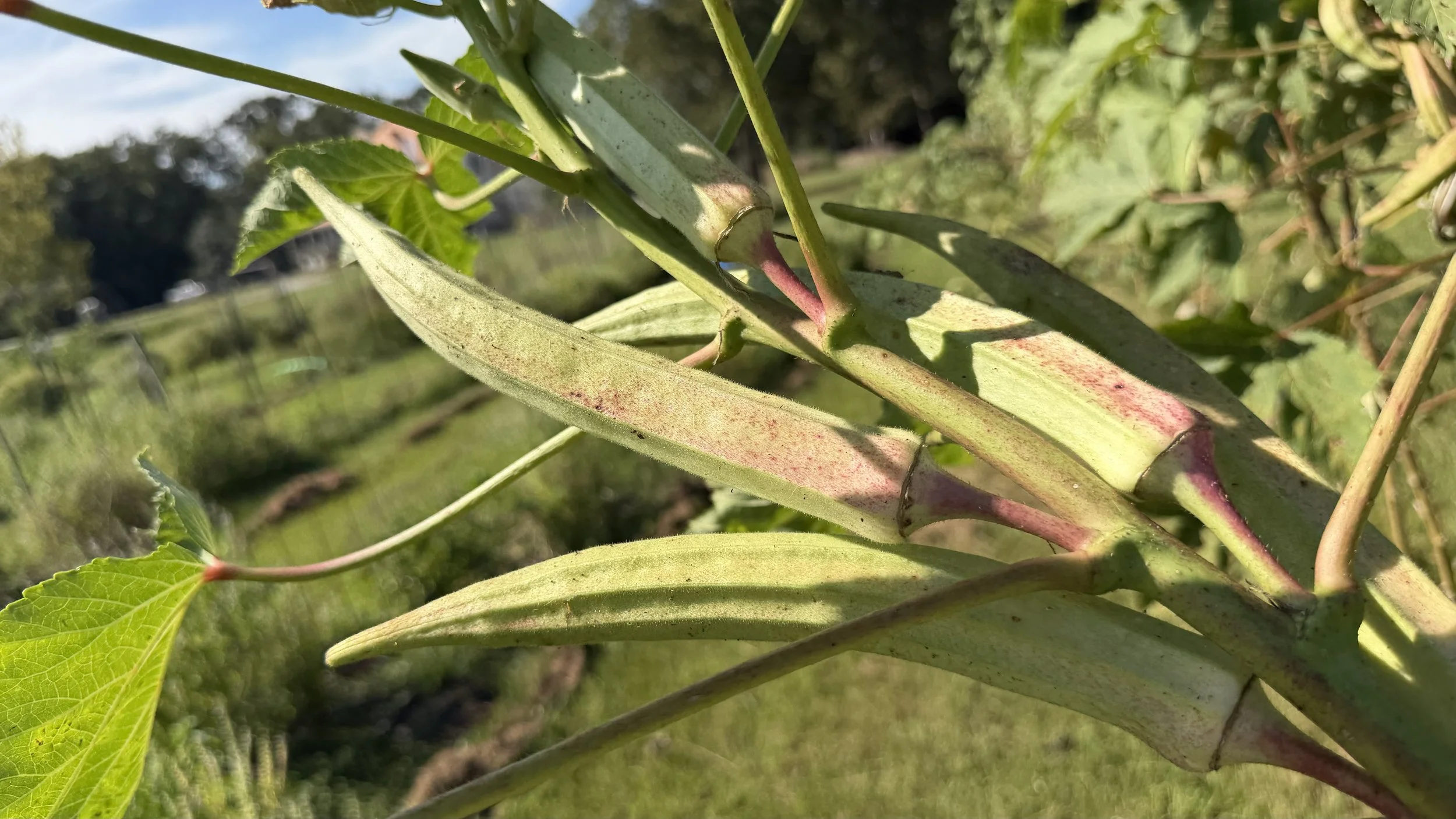
Okra in the vegetable garden
Is that okra over there?
Okra that I hate to pick, and then the bayou runs all the way behind it. I’ve been growing a lot of basil. I love the lemon basil and the blue spice basil. I collect all the seeds. Have you smelled this one before? Oh, God, I love it.
What do you do with the basil?
I dry it and sell it, or we’ll collect the seeds, and sell the seeds, and, really, it’s good just to keep the pests off of our plants. So we had tomatoes lined in between, they kept off the bugs for a while, before it got too hot for the tomatoes. That one is holy basil, which is more medicinal, and a lot of people like that one. These will be good seeds to collect, and then we’ll regrow it in the greenhouse. Hopefully those trees will grow, then we’ll get more shade here. I haven’t picked my okra in a couple weeks. The ants have been so bad, and then I got the cows, and I just got busy. Then my irrigation broke. I’m really hoping to make a lot of edibles for this area, to make sure people have access to lettuce, cucumbers, all organic, you know, not sprayed, not anything. Smell this.
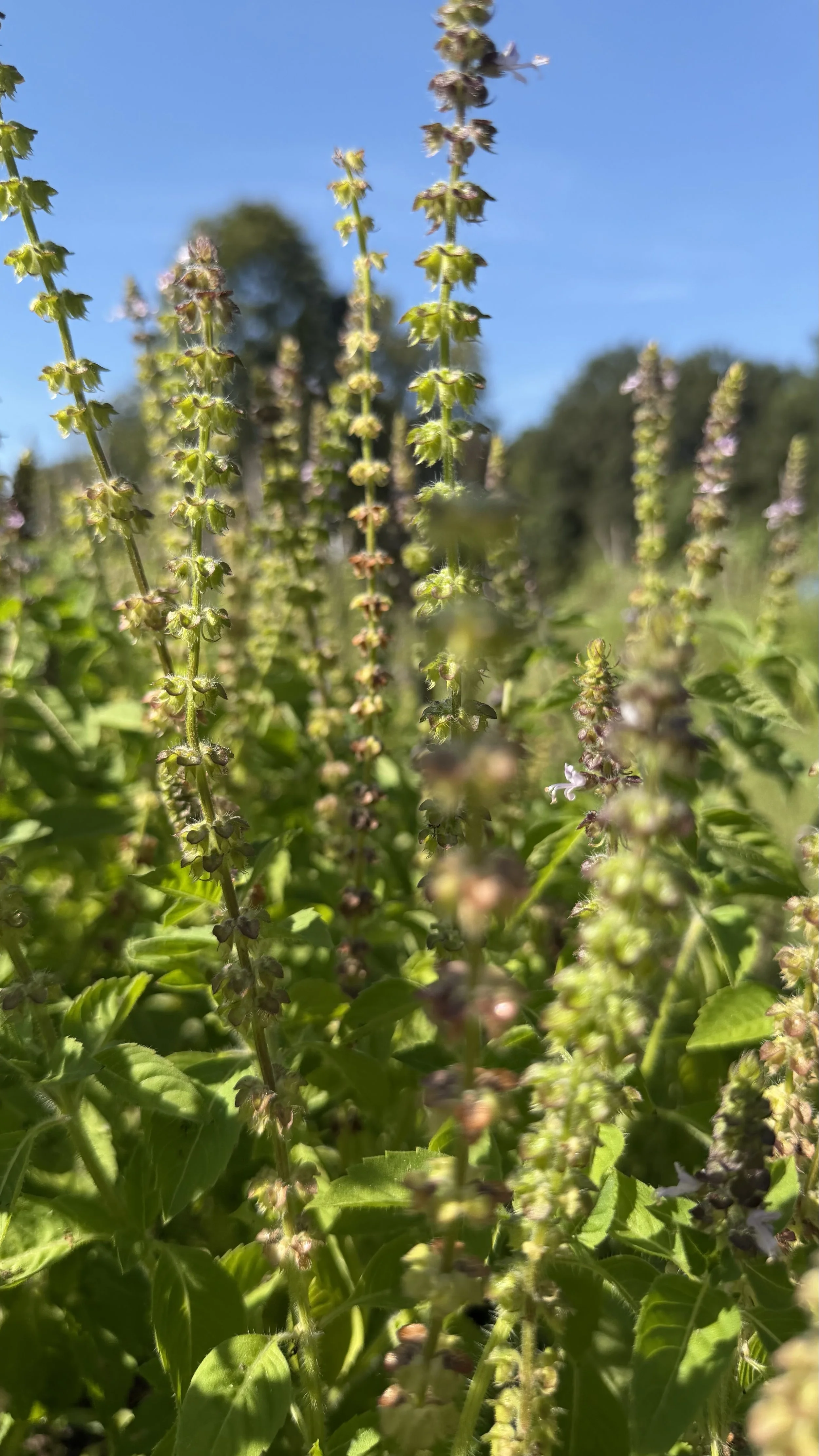
Holy basil (Ocimum tenuiflorum)
Is it lemon?
This one is lemon, that one’s blue spice. And then we’ll have native plants here for the fall. After my festival, I have to go back to hardcore gardening. A lot of people depend on my cabbage in the winter, so I’ll do a lot of cabbage, probably. But this is my first season here. I grew a good bit of cucumbers, and I don’t know why I keep doing okra every year when I know I’m allergic to it.
Compost Piles
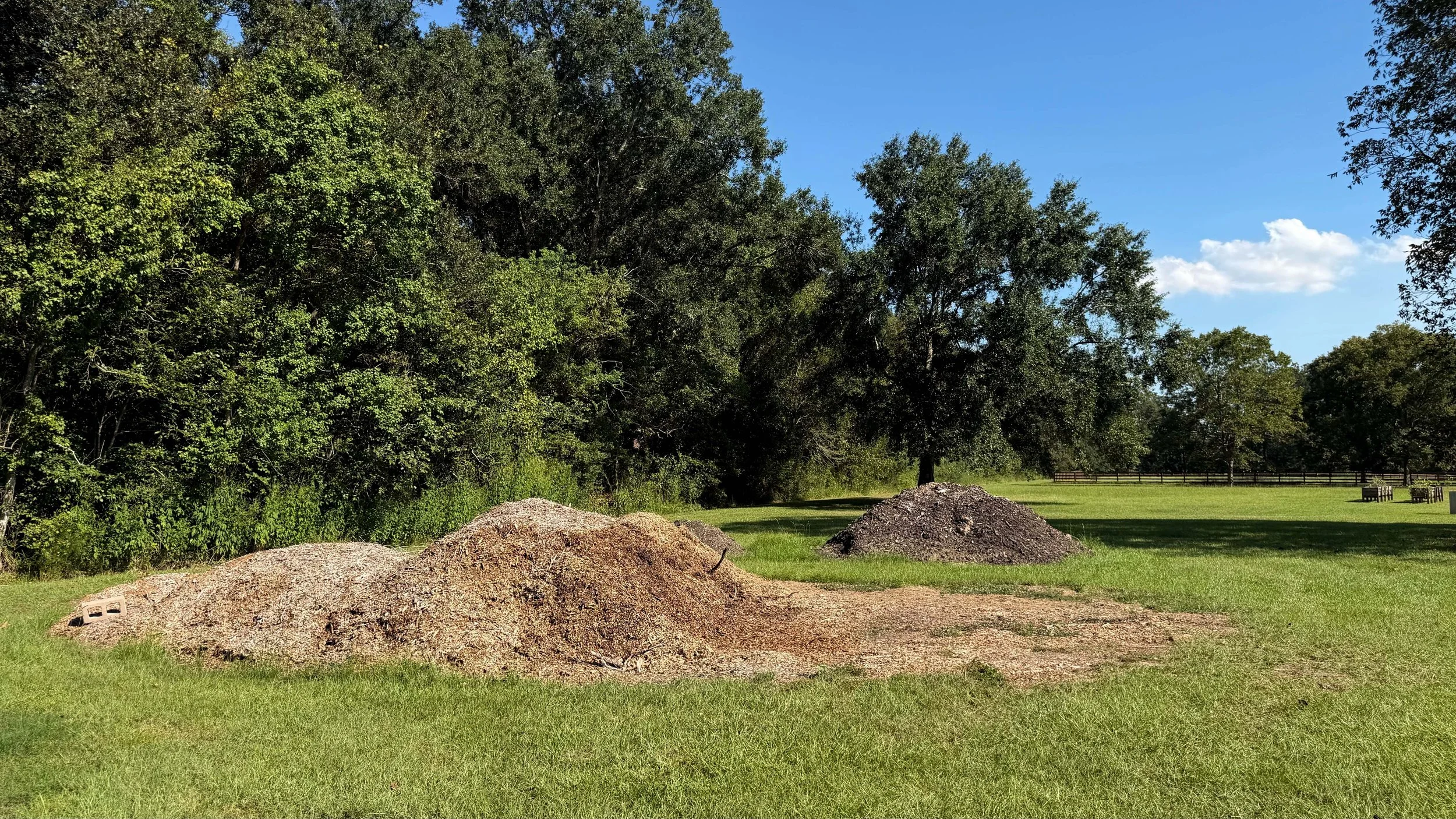
Compost area
This is our big compost area. Every day, or every other day, I get my trailer and I go to Lafayette, and I pick up food waste. Then I bring it over here. The restaurants leave out their dirty trash cans with food, coffee grounds, eggshells, and I bring them an empty, clean trash can. Then we come with the tractor, mix it in right here, and then the goal is to get the compost heated up to 140 degrees.
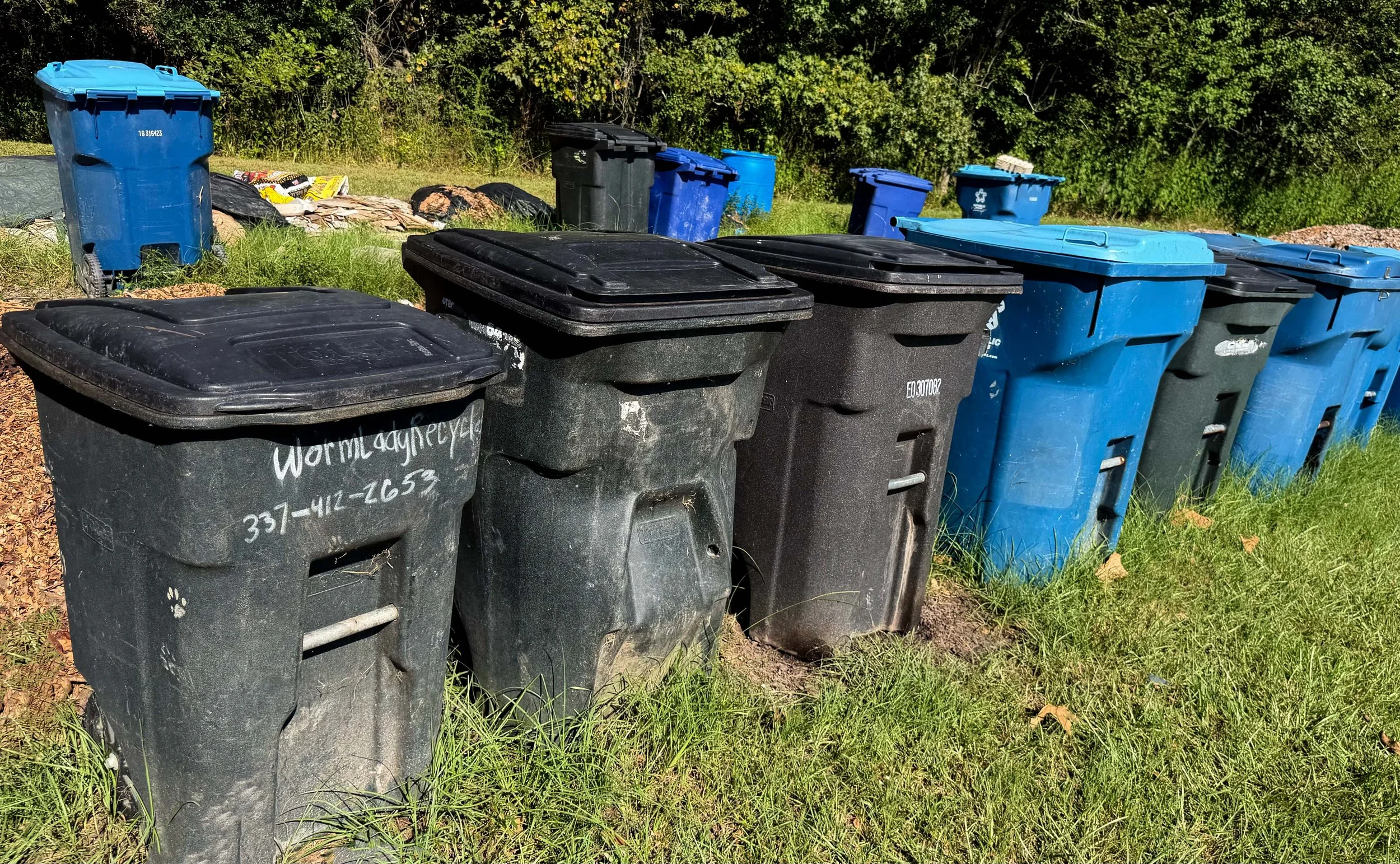
Food waste recycling cans
Let’s see what temperature it’s on? Right at 140, which is where we want to be. Then it goes from here, and it rests right there, and then we either feed it to our garden, use it to pot up our plants or give it to the worms. Three different uses. We could also sell it, but I never have had enough yet to sell the compost and the castings and supply myself. So that’s a goal that we have. Because a lot of people do want our compost. We’re kind of building it still, but this whole space will be good for composting. So if I get more restaurants on board who want to compost their food waste, we have space for that.
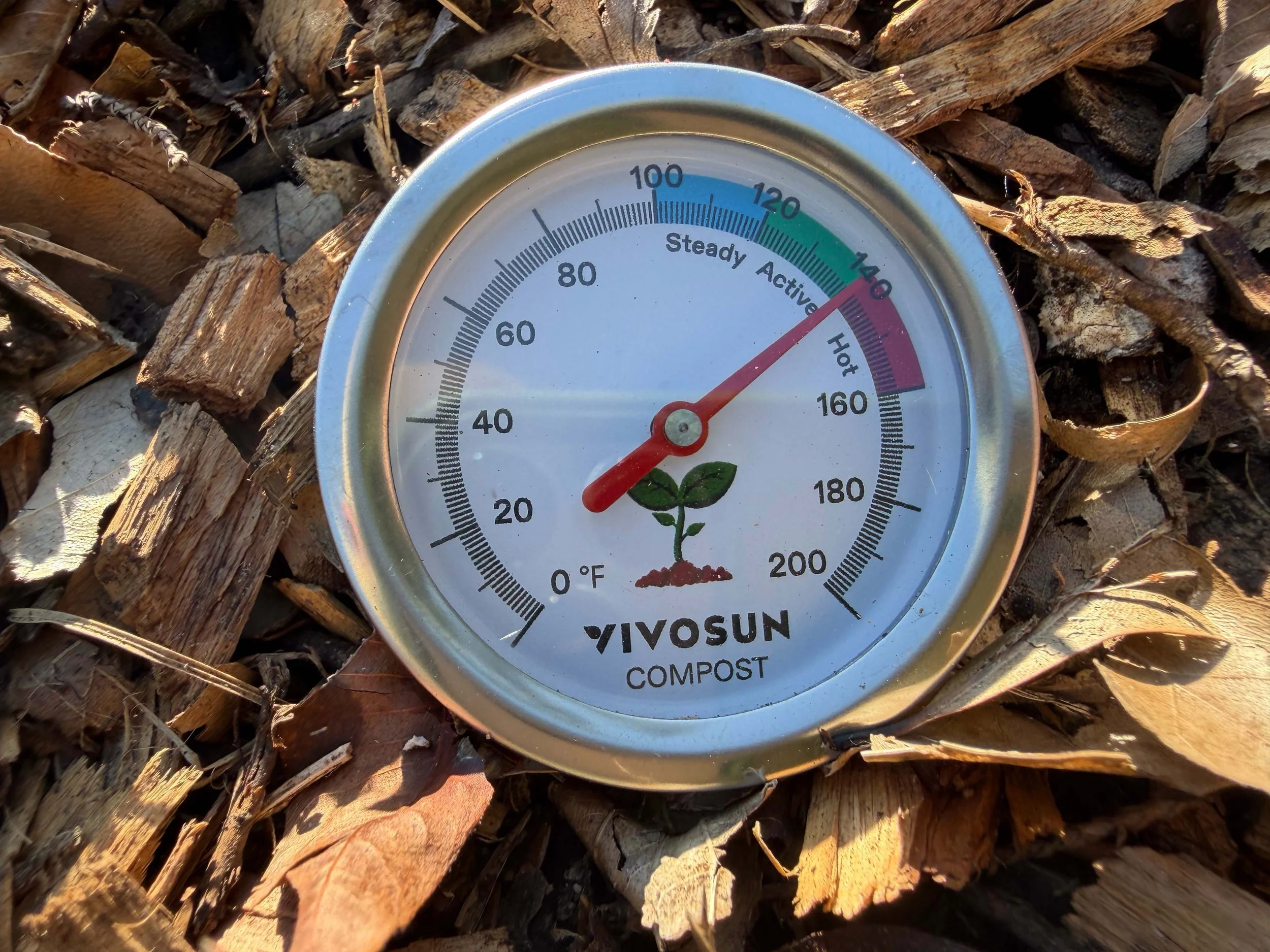
Compost thermometer
Bog
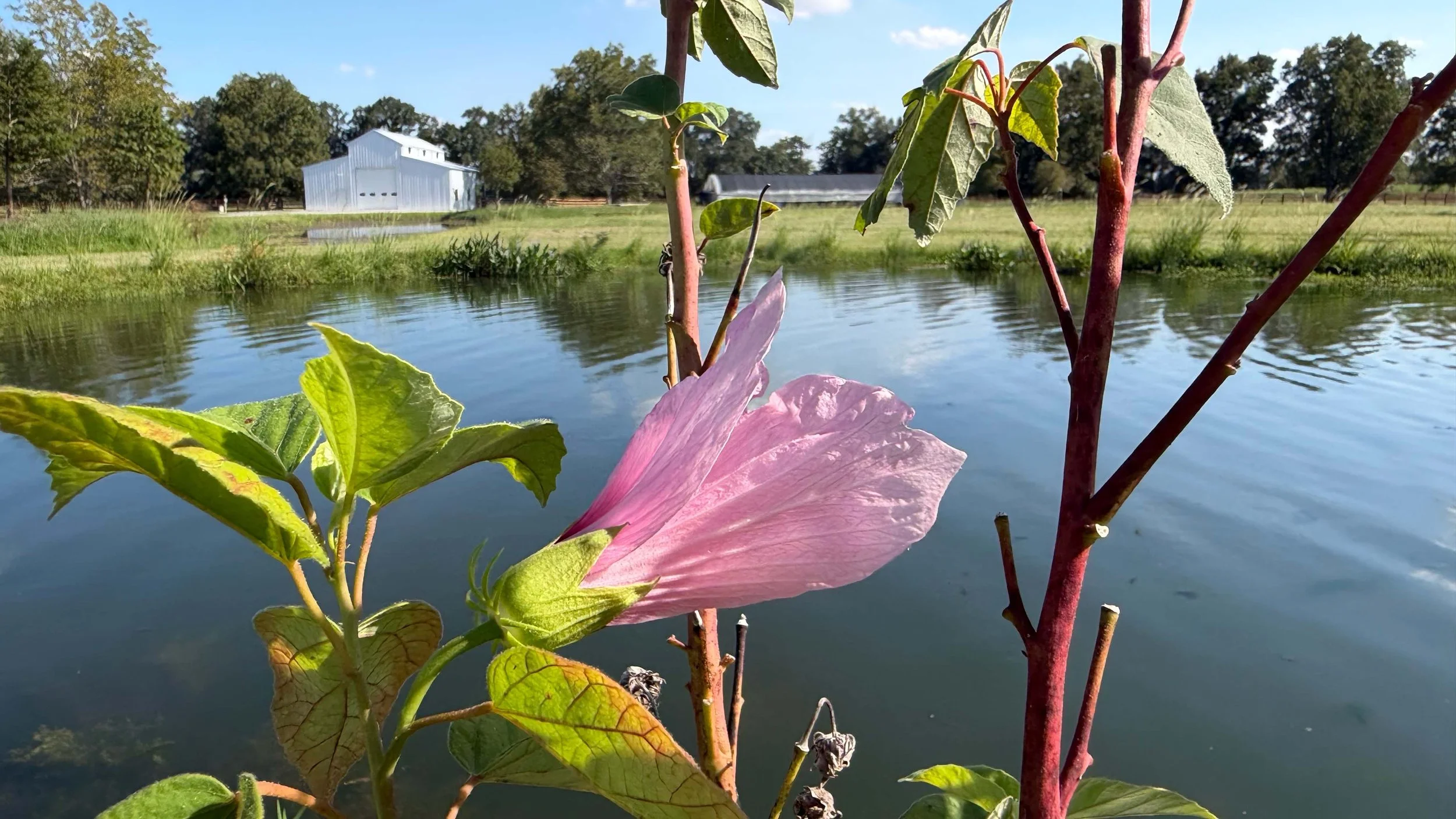
Rose swamp mallow (Hibiscus moscheutos)
And the last thing I want to show you is the bog.
Did you say the bog?
Yes, we have pipes feeding it from below so that it stays nice and wet, and we have some native plants planted around it.
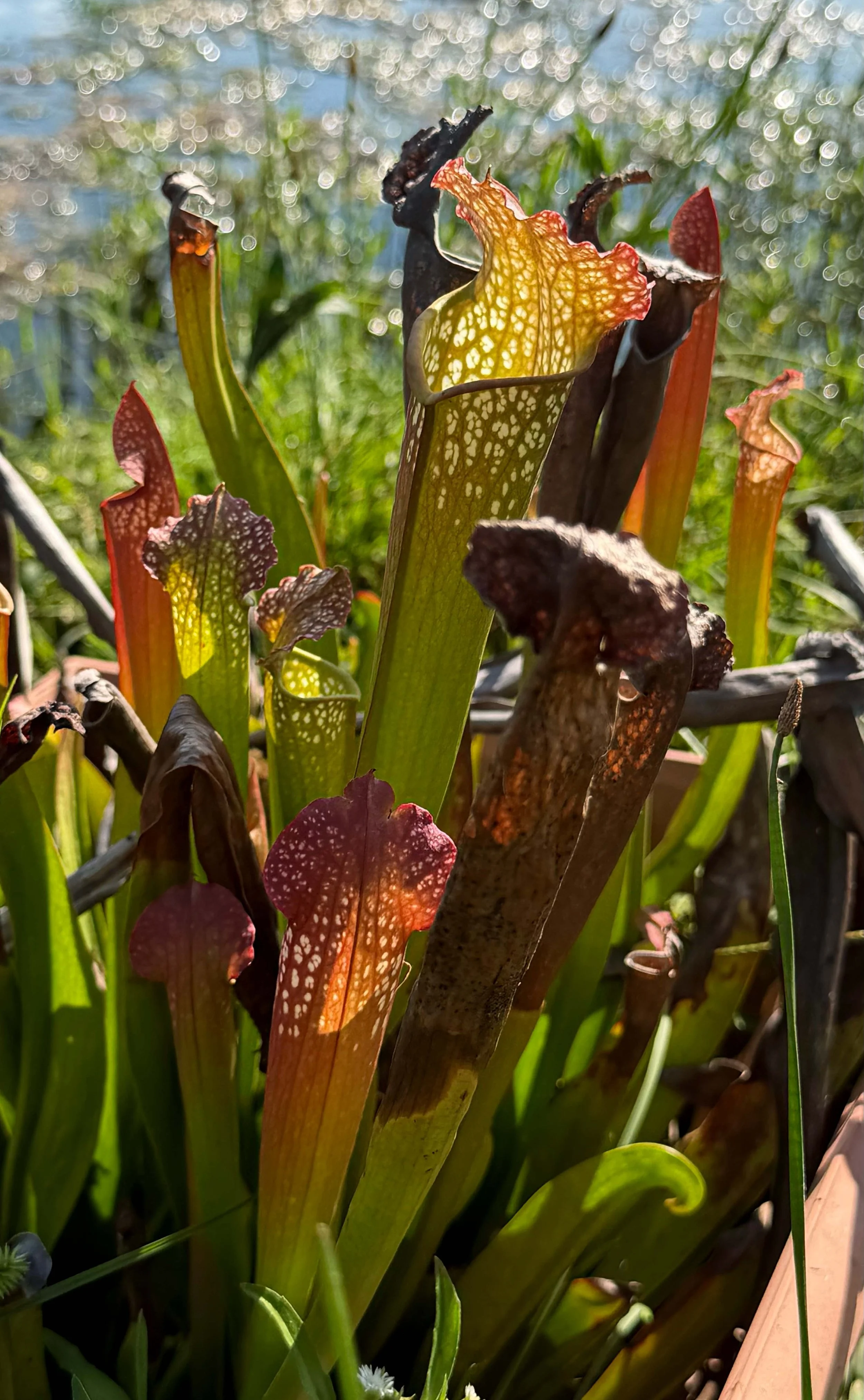
Red pitcher plant (Sarracenia rubra)
We have pitcher plants, swamp mallow, and this is golden canna, the only canna that’s native to this area.
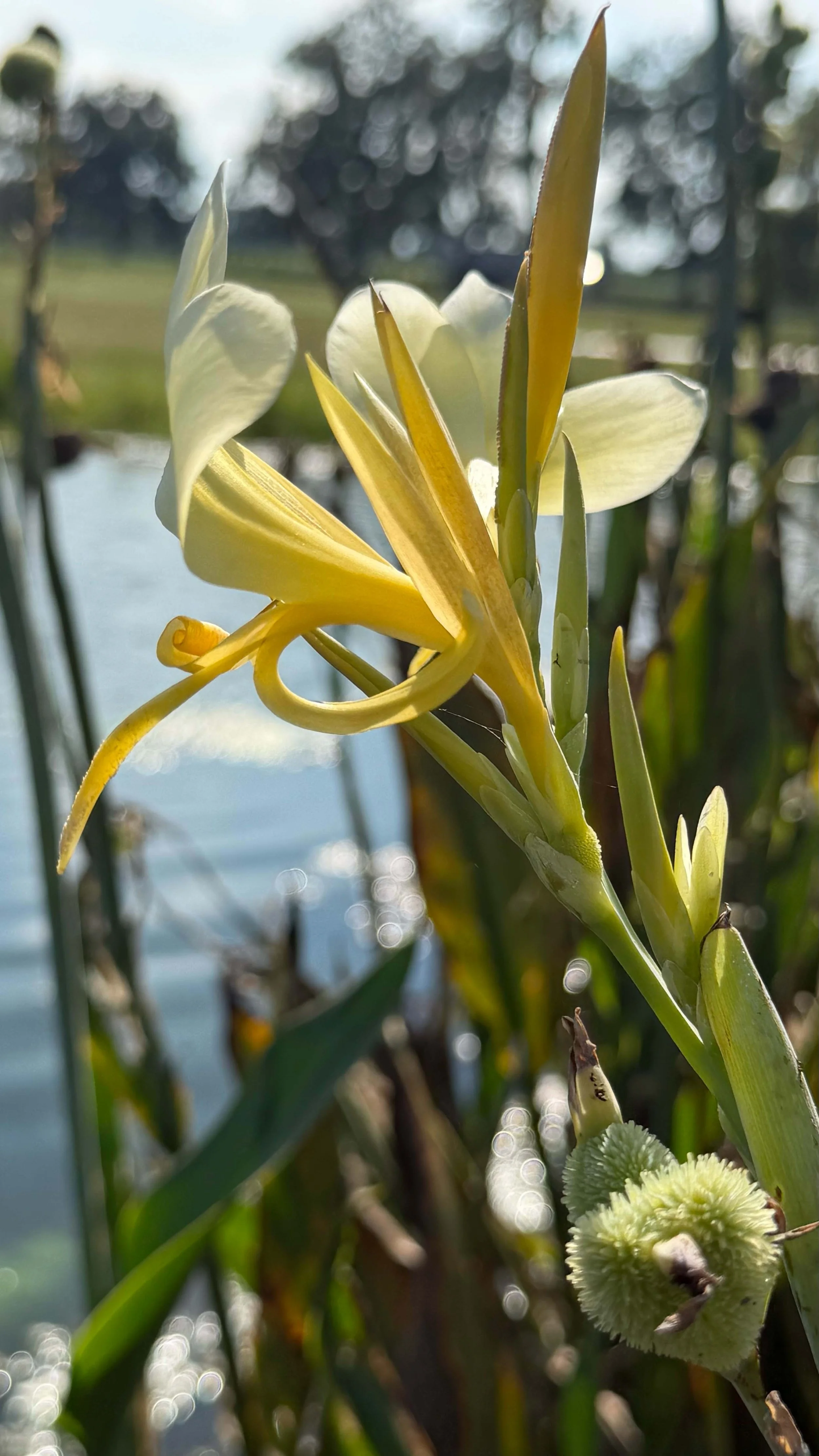
Golden canna (Canna flaccida)
To learn more about Worm Lady Recycles, including opportunities for field trips, purchasing products and seminar schedule check out her website at wormladyrecycles.com
Better the Earth Fest is a free event in Lafayette on Sunday, October 18th, from 9 to 3, featuring local food, live music, kids activities, health products, fresh veggies, herbal remedies, plants for sale and educational speakers. Details can be found here on the Facebook event page.
You can also follow Worm Lady Recycles on all social platforms: Facebook, Instagram, TikTok
Here is an interview with Taylor Lyons Vaughan on YouTube