

Feathers Up!
Bayou Tradition Takes Final Flight
by Jude Theriot
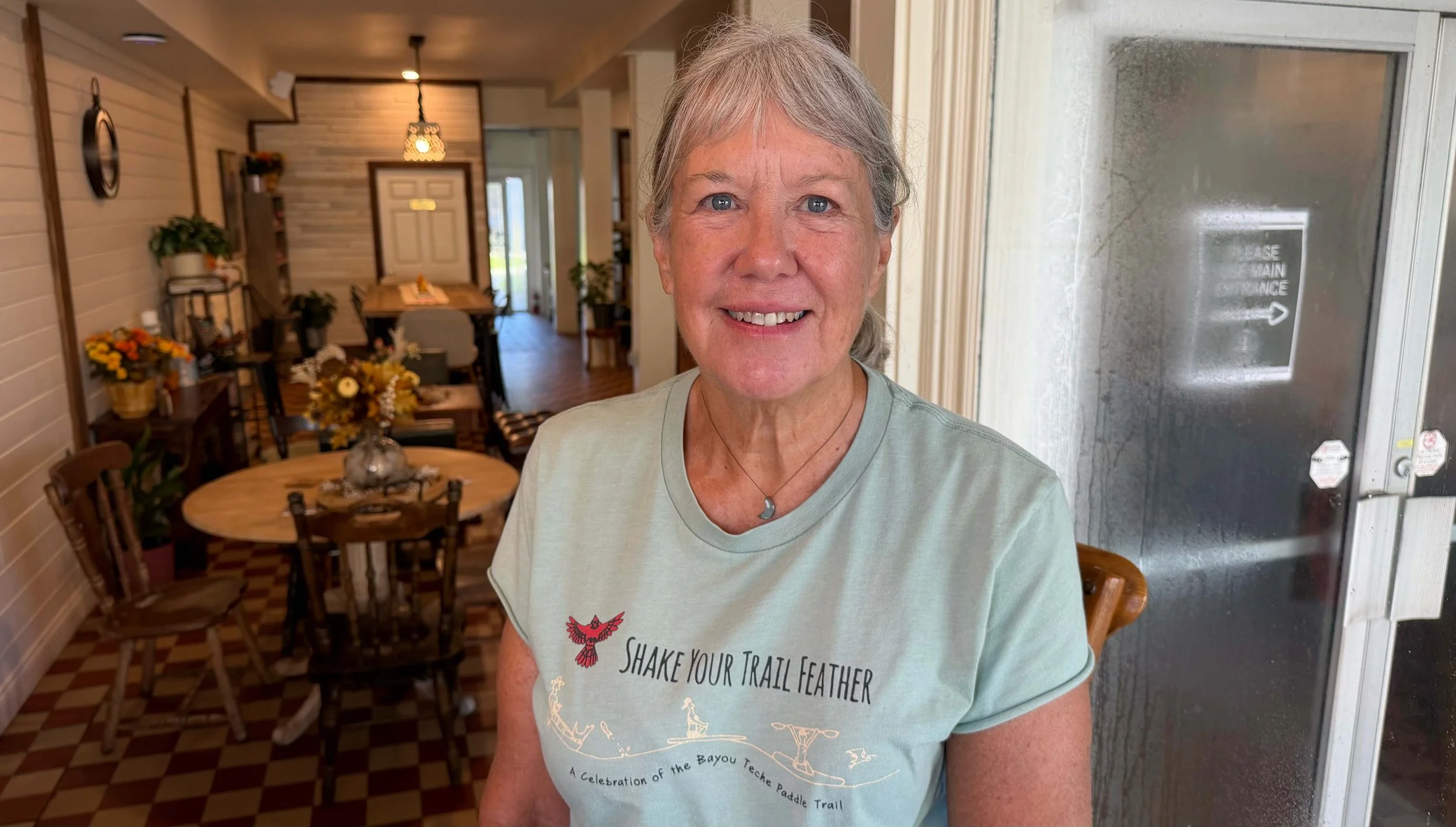
Patti Holland, executive director of TECHE Project
For fifteen years the TECHE Project has been working to make Bayou Teche a cleaner, more accessible and more deeply appreciated part of St. Martin Parish. Its signature celebration of that work may also be its most colorful.
On Saturday, October 17, Shake Your Trail Feather returns to Bayou Teche for its 15th and final year, sending a flotilla of canoes and kayaks—decorated, feathered and accompanied by live Cajun music—down 4.5 miles of the bayou from Poche Bridge to Breaux Bridge. The paddle parade ends at Parc des Ponts, where the celebration continues with food, children’s activities, a bird-costume contest and live music from Chubby Carrier and the Bayou Swamp Band.
The festival is more than a party on the water. It’s a fundraiser for Louisiana’s only National Paddle Trail, completed in 2023 after years of work by the TECHE Project and its volunteers. Today, docks and informational kiosks in sixteen communities make it possible to explore the bayou in a series of manageable trips from one trailhead to the next.
With Shake Your Trail Feather approaching, I sat down with Patti Holland, executive director, to talk about her path to the TECHE Project, her career working with wetlands and migratory birds, the ecology of Bayou Teche, and the long community effort to keep the bayou clean, navigable and wild.
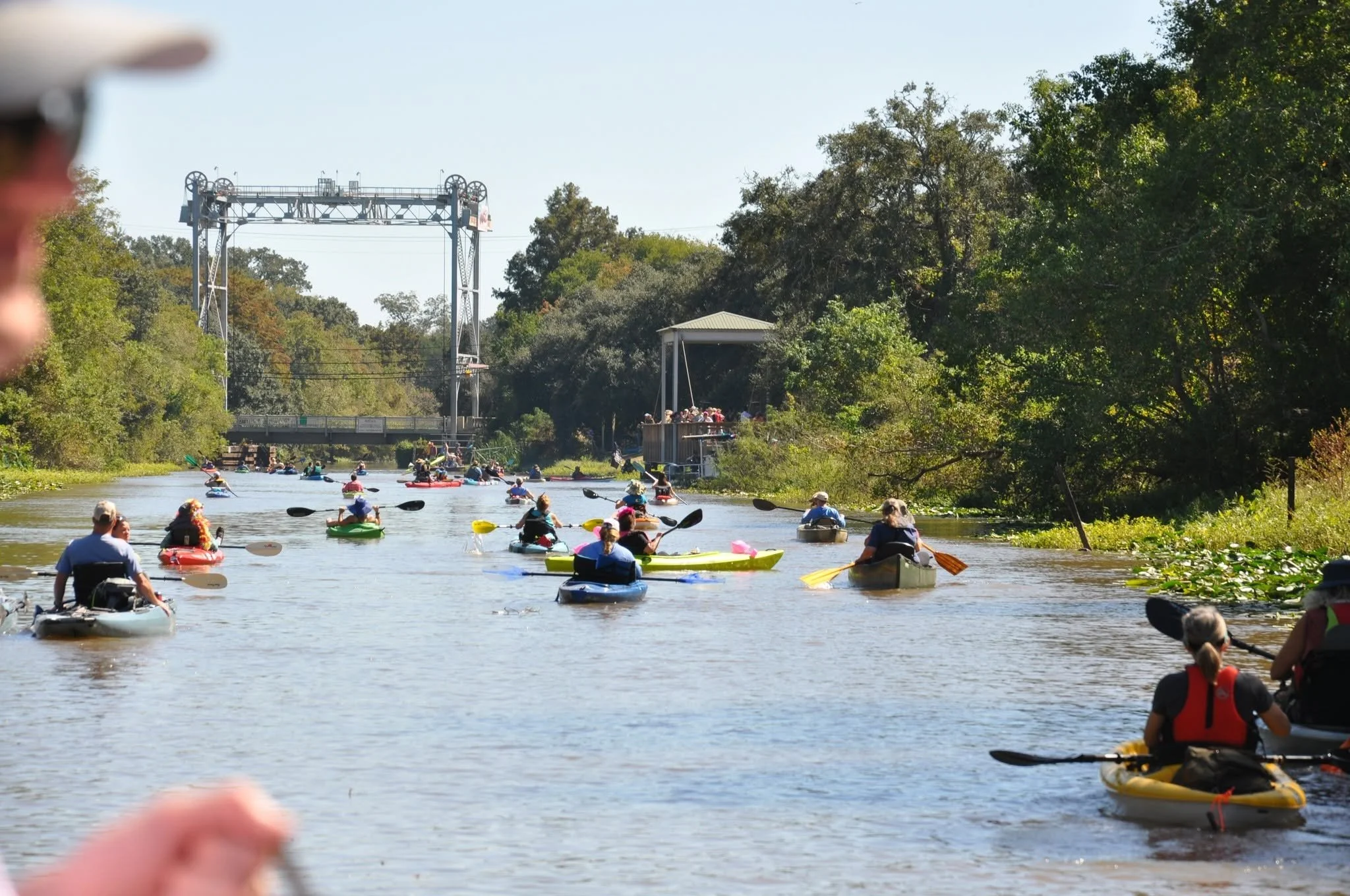
Paddle Boat Parade, Parc des Ponts, Breaux Bridge
How did you first get involved with the TECHE Project?
In my former life I worked for U. S. Fish and Wildlife Service. I worked there in Lafayette for thirty-one years in the ecological services office as a wildlife biologist. I moved to Arnaudville toward the end of my career and fell in with a group of people that were cleaning the Teche called Cajuns for Bayou Teche, and from there it grew into the nonprofit of the TECHE Project. I wanted to do something when I retired and not just sit at home, so I got involved with the TECHE Project, and now I’m the executive director.
Have you found a lot of overlap between your career interests and the TECHE Project?
Definitely. The TECHE Project is an acronym that stands for Teche Ecology, Culture and History Education. So, ecologically, I’m kind of like the point person. We have a lot of ecological programs with the TECHE Project. We do a wood duck workshop, teaching people how to rear wood ducks on the bayou, and we do bank-line stabilization and bank-line restoration projects. We wrote a bank-line management guide, and so that’s all stuff that I pulled in.
What was your area of interest as a biologist?
As a biologist, I was in wetland regulatory, for the most part. I did a lot of migratory bird work as well. The big coastal restoration projects down on the beaches, they impact nesting shorebirds and seabirds, so we developed hazing plans with the CPRA (Coastal Protection and Restoration Authority) so that the birds wouldn’t nest there while they’re doing the project, and because their projects are beneficial. They’re creating beach, but in the short term, they’re gonna take out the nesting habitat, so the birds go someplace else to nest that season, and then they’ll come back and nest there the next year. (In wildlife management, “hazing” means deliberately using nonlethal disturbances to discourage animals from occupying a particular location. For nesting birds, a bird hazing plan might involve repeated human presence, noise, visual deterrents or other techniques intended to keep birds from establishing nests in an active construction area.)
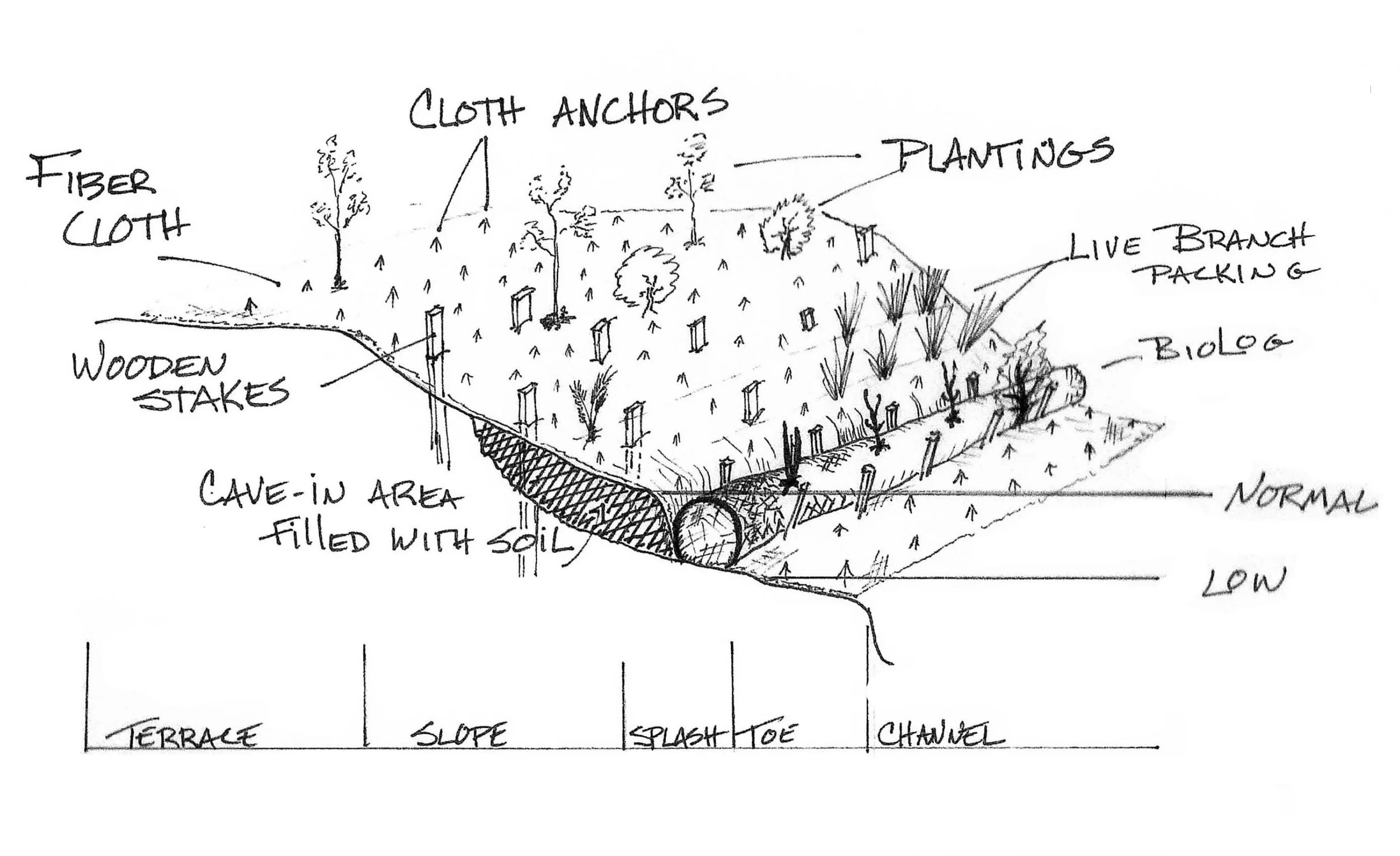
From Bank-Line Management Guide written by Patti Holland, illustration by Tami St. Germain
What is the importance of bank-line stabilization?
There’s a lot of erosion. The Teche isn’t one of the worst. The Vermilion is worse in terms of erosion. But a lot of people like to have grass on the way down to the bayou, and then they wonder why their bank-line is falling into the bayou. So we try and teach them that you can do restoration techniques and still have your view of the bayou. You can have your cake and you can eat it too, so to speak. We do things like, we make sure your slope’s right, and you avoid putting bulkheads in. Bulkheads are bad, because they cause deflection and increase erosion in other places. It might be good for your yard, but it’s not gonna be good for the bayou across the way or your neighbors. So we discourage people from putting bulkheads in.
Does stabilization also depend on what kinds of plants you have?
Yes, we try and do it with native plants, but there are some cases where you have to have some armoring. It depends on the erosion situation. For the most part, all you need to do is get your slope right and plant native plants.
What’s the status of bird life on the Teche?
Bird life on the Teche is pretty good. I mean, it depends on where you are on the Teche, but in the upper reaches in St. Landry Parish, and also in St. Martin Parish, it’s very good, because it’s a lot of hardwoods, and you get a lot of the songbirds. During migration, you’ll have a lot of birds, because they like to be close to the water. So you have a riverine situation with a gallery forest and lots of large trees next to a water area, and it draws in a lot of bugs, which brings in a lot of birds.
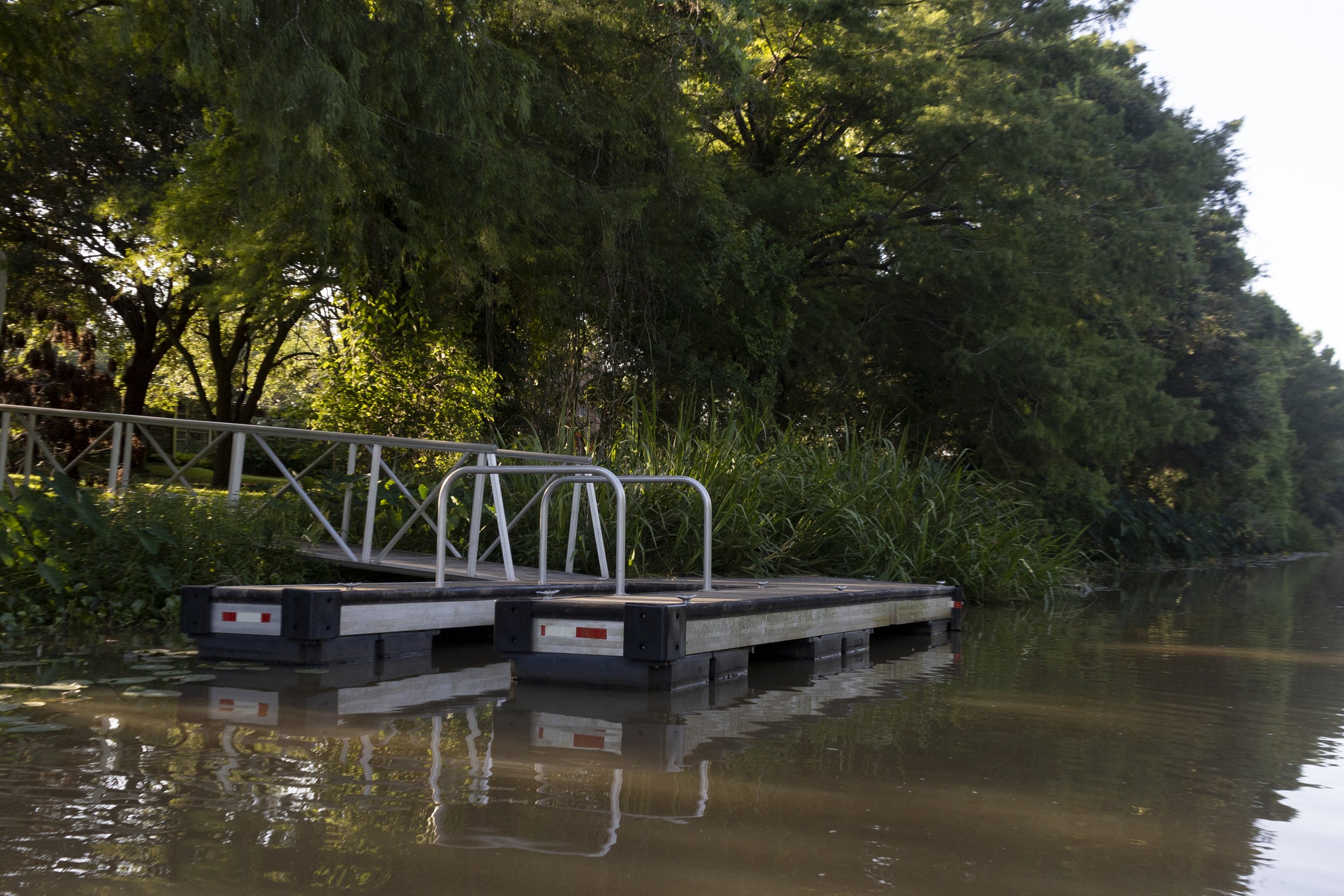
Floating dock on Bayou Teche, Evangeline Oak Park in St. Martinville
The more people are engaged with the bayou, the more they’re invested in it.
You have to have a reason to love our bayous. And it might be because of nature, or it might be because of paddling. Or just watersports in general. Getting your party barge out there and going up and down the bayou. But first you have to have a clean bayou. And that’s where we started with the TECHE Project. We’ve cleaned over sixty tons of garbage out of Bayou Teche in sixteen years.
And that’s just getting out in a canoe or a kayak?
We’ve had some large scale cleaning projects, but a lot of it is just people going out on their own, doing their cleaning as they go. And just changing the mindset of people to love their bayou. There’s always new trash. Unfortunately, Bayou Teche is listed as an impaired waterway. A lot of the issues come from other places, not from the Teche Corridor itself. It’ll come from Opelousas, and little tributaries that feed into Bayou Teche, tributaries out of Lafayette and Bayou Tortue, in that area, feeding into Bayou Teche. And then the other problem is agricultural. Phosphorus and nitrogen from the agricultural fields. So you just need to have a buffer, lots of plants on the bayou, and that’ll filter all the pollutants. Another reason to have a lot of plants.
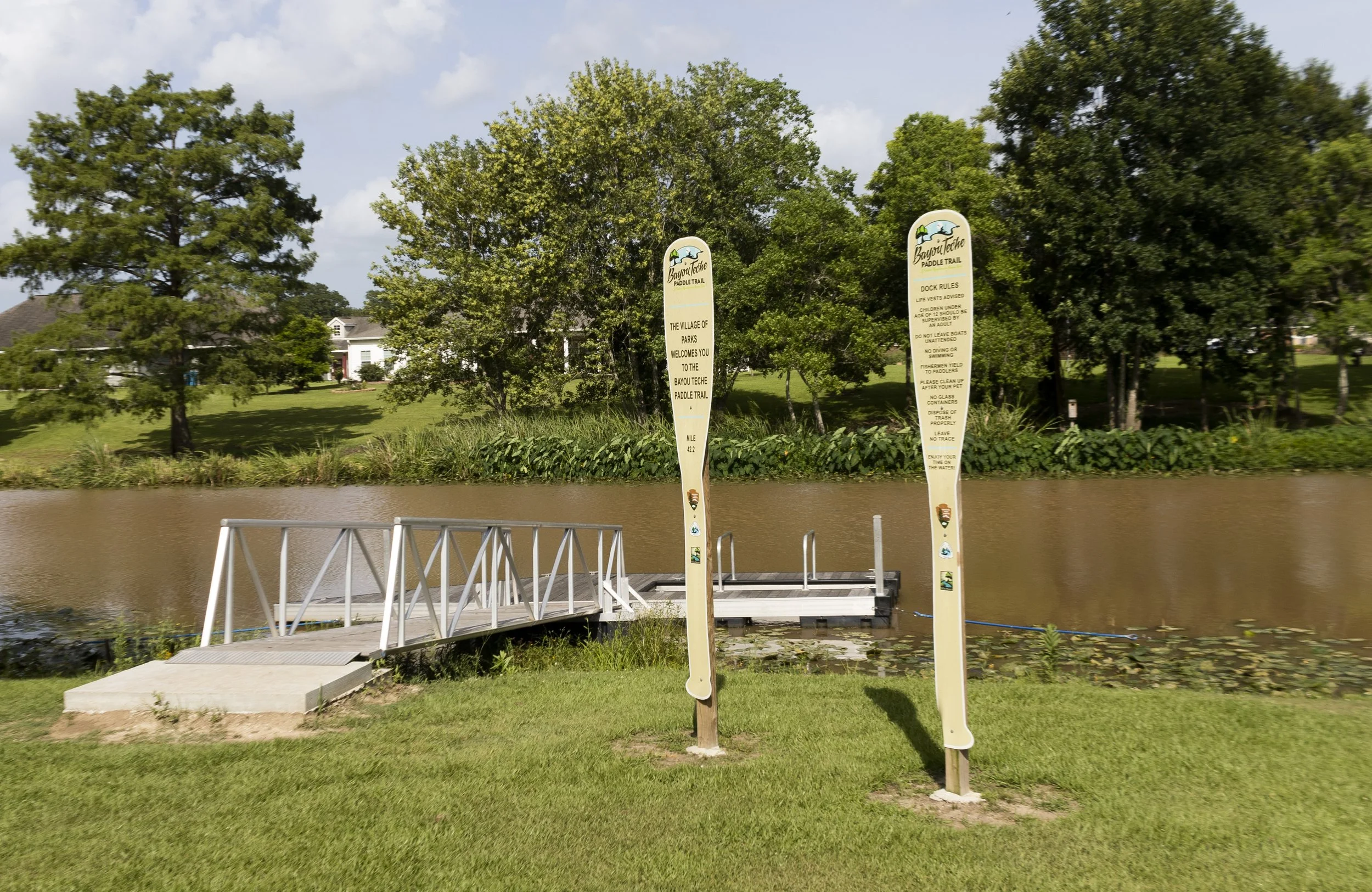
Floating dock on Bayou Teche, Cecil R. Poche Park in Parks
What’s special about Bayou Teche compared to other waterways?
What I like about Bayou Teche, is that you can get into a boat, and do a short little trip down to the next town, get out in that town, and enjoy the culture and the ambiance of that town. We’ve got jewels of little towns up and down the bayou, St. Martinville, Breaux Bridge. You just pop on down the bayou, and it’s short little trips. If you’re paddling, you can do it with kids. You can put in at Poché Bridge, and in two hours, you’re in Breaux Bridge. There’s a current in the upper part of the bayou, so it’s easy to just float on down and it’s fun, it’s scenic, and when you get to where you’re going, there’s always something to see. Bayou Teche used to be the main artery for commerce and life in Acadiana. So these towns, these historic and culturally significant towns are all along the bayou to enjoy.
When I was at the unveiling of the kayak kiosk in St. Martinville, it struck me how it’s building on the infrastructure that the TECHE Project put in place. It’s a cumulative thing. Once you get it established, and you make it accessible, then you can build on top of that. And it’s a return to the water-based mode of transportation that we’ve gotten away from.
Right now the TECHE Project is doing an oral history project, interviewing people, old timers on the bayou, even some current stories, to tell people about life along the Teche. One of the things that came up, there was a doctor that used to do house calls by boat along the bayou. Now you’ll see parents dropping off their kids to St. Bernard School sometimes. Because they live here in Breaux Bridge, and they’re like, “Let’s take the kids to school."
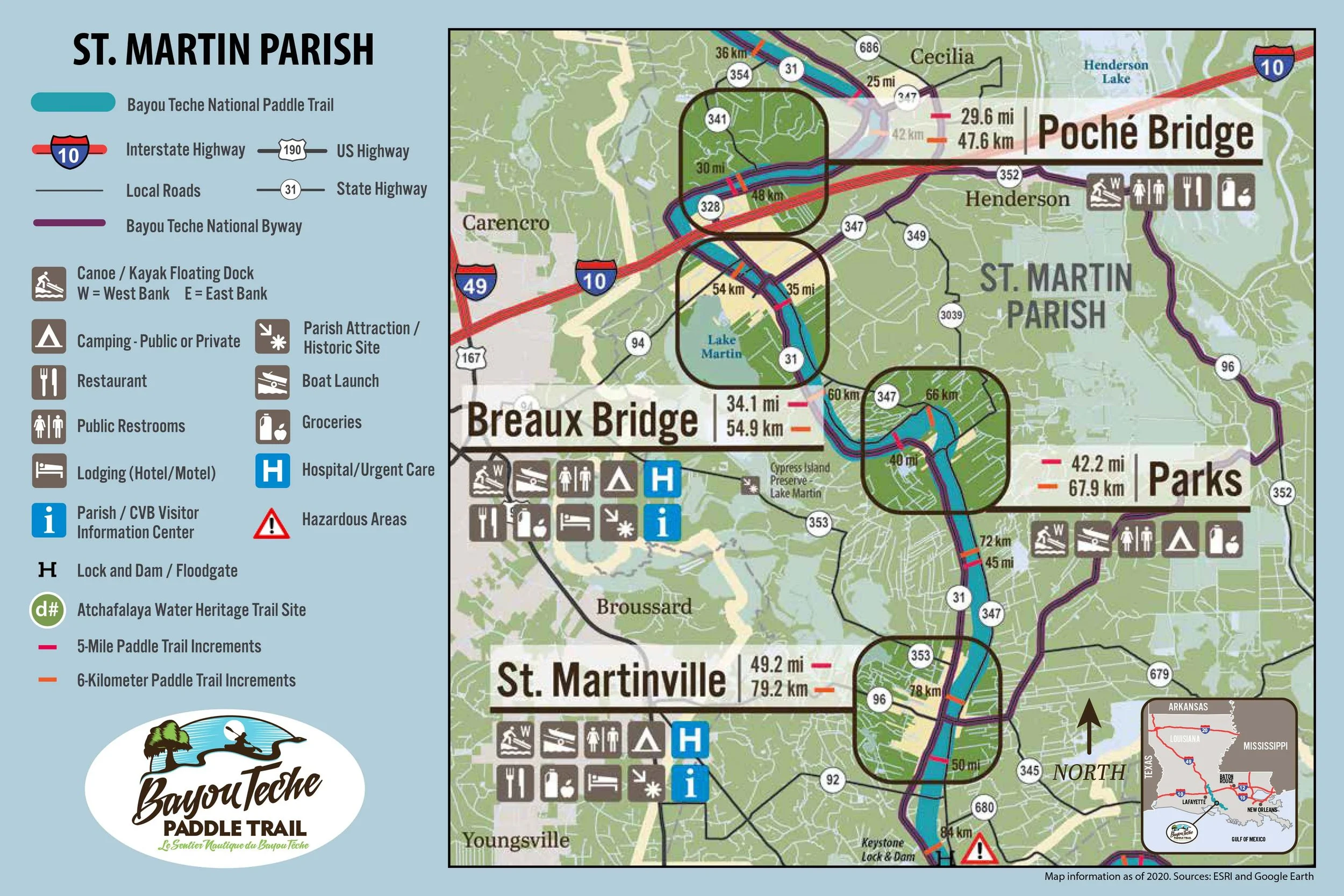
TECHE Project paddle trail guide
Tell me about the Shake Your Trail Feathers event that’s coming up.
For the TECHE Project, it’s a celebration of the paddle trail that we built. The paddle trail took us eight years to put in, several grants with the federal highways department, and then administered through the Department of Transportation and Development and the state parks. So we got three or four grants along the way to enable us to put in the floating docks. Now that the paddle trail is built, we’re trying to do what we can to promote it. It’s 135 miles long. It goes from Port Barre to Patterson with docks, and then actually goes down to Berwick with a kiosk. And there are structures between Patterson and Berwick, so it’s difficult to paddle beyond Patterson. Corps of Engineers has gates and stuff like that.
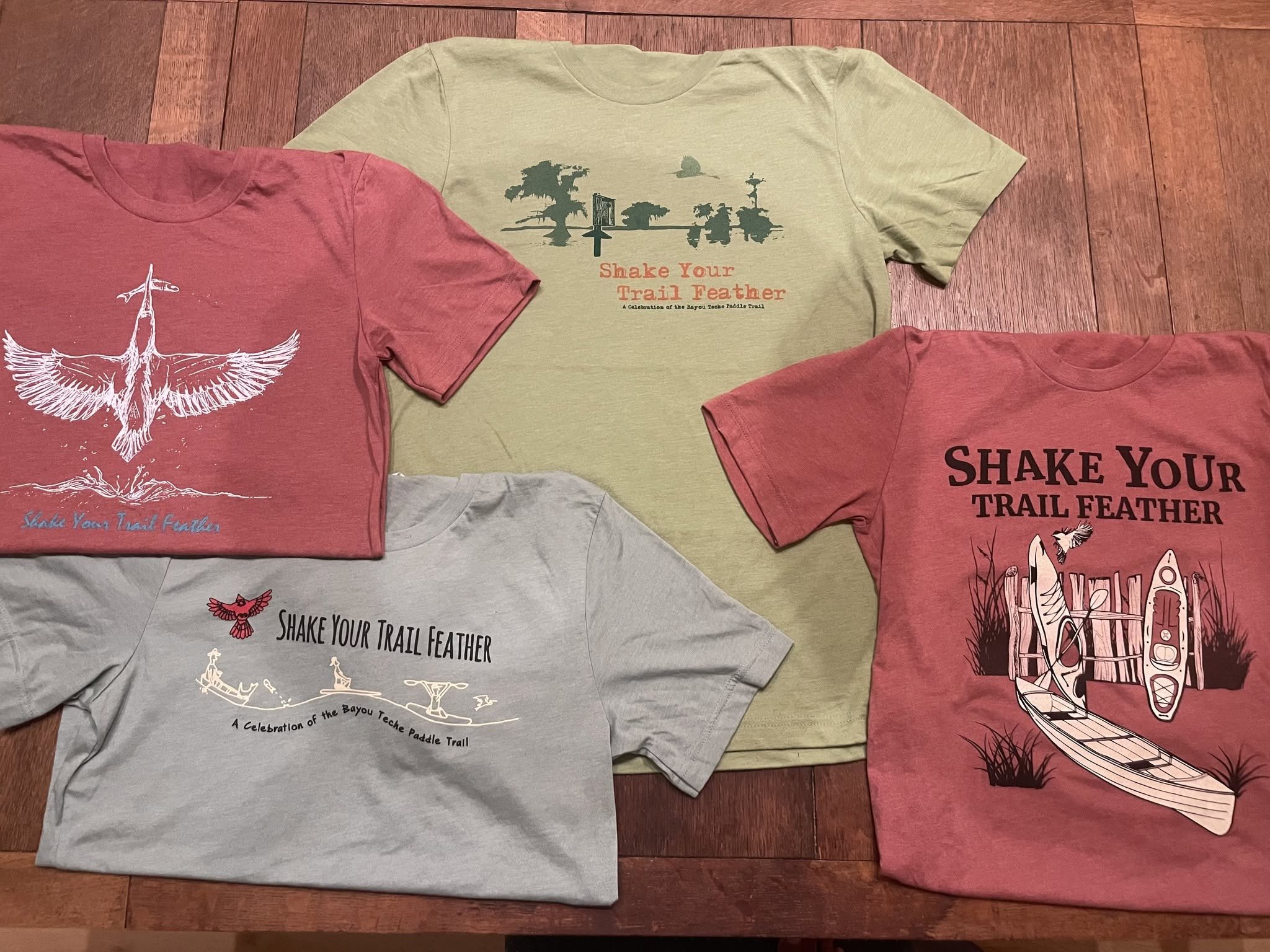
TECHE Project merch
Is it something you can do if you notify the right people and get them to open the gates?
Yes, in fact, Tour de Teche does it. Tour de Teche is our sister nonprofit. They were actually part of the TECHE project at one time and then broke off on their own. They do the races and we do the leisure paddles. The Tour de Teche race, their big race, goes all the way down to Berwick, and they open it up for that.
So Shake Your Trail Feather is a portion of the larger trail?
Right. That’s our celebration of the paddle trail. We do it every fall. This year, it’s Saturday, October 17th. We start in Poché Bridge, and we do a paddle parade. We have floating barges with Cajun musicians playing, and we encourage all the paddlers to come and dress colorfully and wacky. Every year we have a theme bird, and this year, our theme bird is the red-bellied woodpecker, which is the most common woodpecker that people see and hear along the waterway and in their backyards, for that matter. And when you buy a ticket to paddle, you get a bird pin, and you also get a membership to the TECHE Project. It’s thirty dollars on Eventbrite to get your ticket. Kids paddle for free, fourteen and under, because we want to bring families out. And we tell everybody to dress up like the bird of the year, and then we give away prizes for the costumed people afterwards. But they paddle for two hours down the bayou from Poché Bridge to Parc des Ponts in Breaux Bridge, here at St. Bernard School. That’s from ten to twelve, and then at twelve o’clock we have a band kicking off, and this year it’s Chubby Carrier and the Bayou Swamp Band at Parc des Ponts. And it's free. So even if you don’t paddle, and you live in the area, and you want to come down to the park and enjoy some music, we’ll have food vendors and activities for the kids.
How many miles is the paddle between Poché Bridge and Parc des Ponts?
Four and a half. That’s a two-hour easy paddle. The year I finally got to do it, year before last, the current was running so good because Teche-Vermilion Fresh Water District, they’re actually a sponsor of ours, you know, they’ll put water in the bayou for the event. And actually, they’re usually flooding it in the fall for the agricultural people down in Vermilion Parish, if you can believe it, floating up their fields for crawfish and rice and stuff. So they’ll start their pumps, and when their pumps are running, you don’t even, I mean, you just kind of guide yourself. It’s so easy. So it’s fun, and you’re floating along, and the bands are playing.
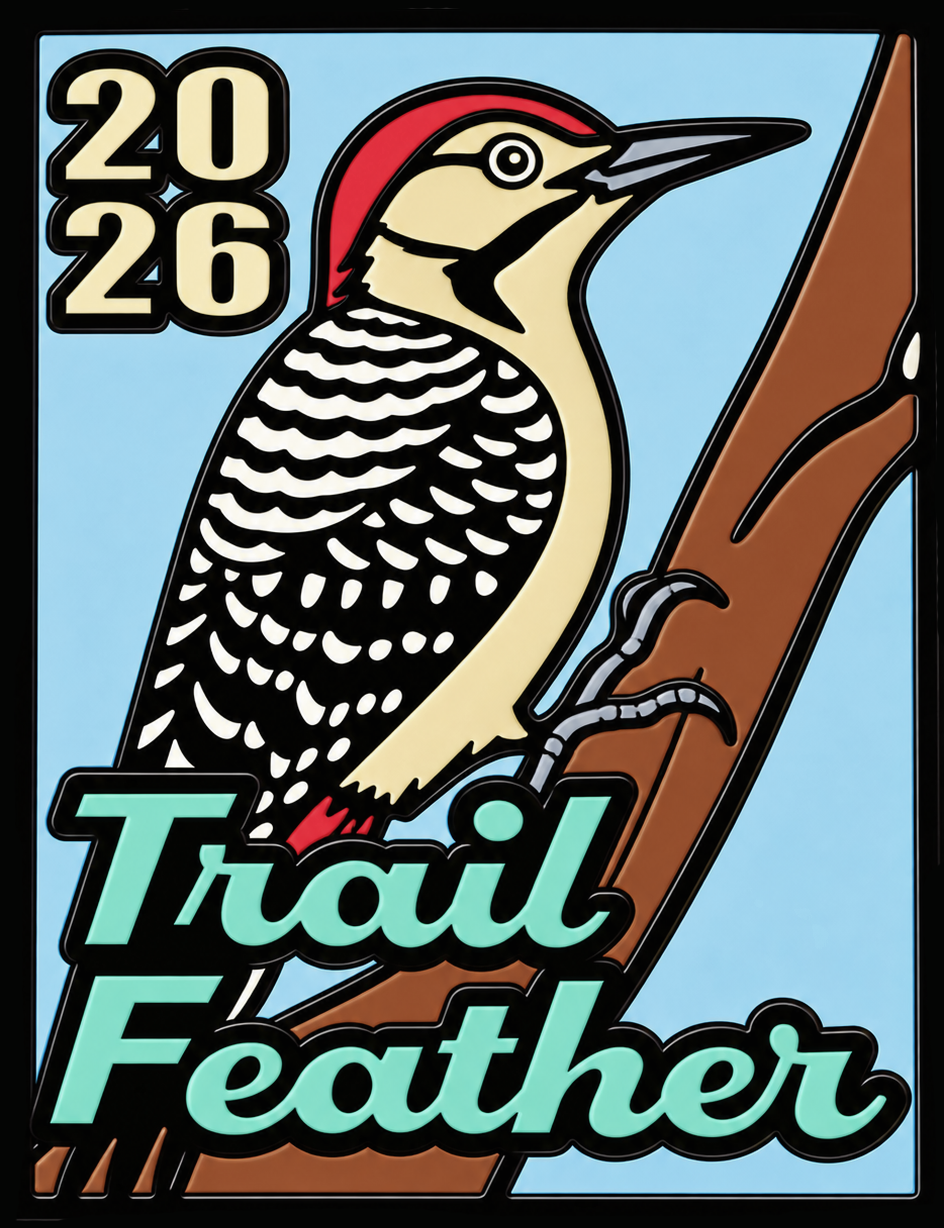
2026 bird theme: red-bellied woodpecker
It’s not an endurance paddle. It depends on what you want to get out of the Teche, because the Teche can provide both. If you want endurance paddling, you paddle through, you go on down. After the Charenton Canal, the current in the Teche goes backwards. A lot of people didn't realize that when they started doing Tour de Teche. They thought it would be an easy peasy paddle, and they get down there, they’re fighting against the current, and then the water hyacinths after a very long paddle. That’s like mile 80 or 90, something like that, when that hits you. New Iberia is mile 75 and Franklin is, I think, mile 100. And there’s a lot of water hyacinths, because it’s tidal, and water hyacinths float in from Vermilion Bay, and East Cote Blanche Bay.
So, as the Teche proceeds along its course, it behaves very differently?
It’s cool, because down there, one of my favorite paddles is, I paddle backwards. We did a paddle trail planner, and you can get that on our website. You can also get the bank-line planner. But the paddle trail planner can give you a guide for one-day trips, three-day trips, that kind of thing. So if you want to come down and spend some time on the bayou, we can tell you where to go and what to do. One of the things we tell people is that after the Charenton Canal, it runs backwards, so think about paddling backwards. One of my favorites is to put in in Centerville, and there’s a park out in the middle of nowhere in Centerville, but it’s a six-mile paddle from Centerville to Franklin. And the bayou is completely different there. It’s much wider, like twice as wide as it is here in Breaux Bridge, and the banks on the sides are cypress trees.
Is that where the Bayou Teche National Wildlife Refuge is?
Yes, kind of in that area. In fact, you can go off the Teche and into the refuge and back into the Teche again. You know, make a circle. But you can paddle backwards, and when you’re finished, you’re coming into Franklin, and you’re looking at all these antebellum homes. They’re pretty from the road, but they’re gorgeous from the bayou, because that’s their fronts. When we tell people now about what the TECHE Project is, we want you to orient yourself to think that the Bayou Teche is your front yard and not your back yard, and turn your focus towards the bayou. Our ultimate goal with the TECHE Project is to get people to think in those ways.
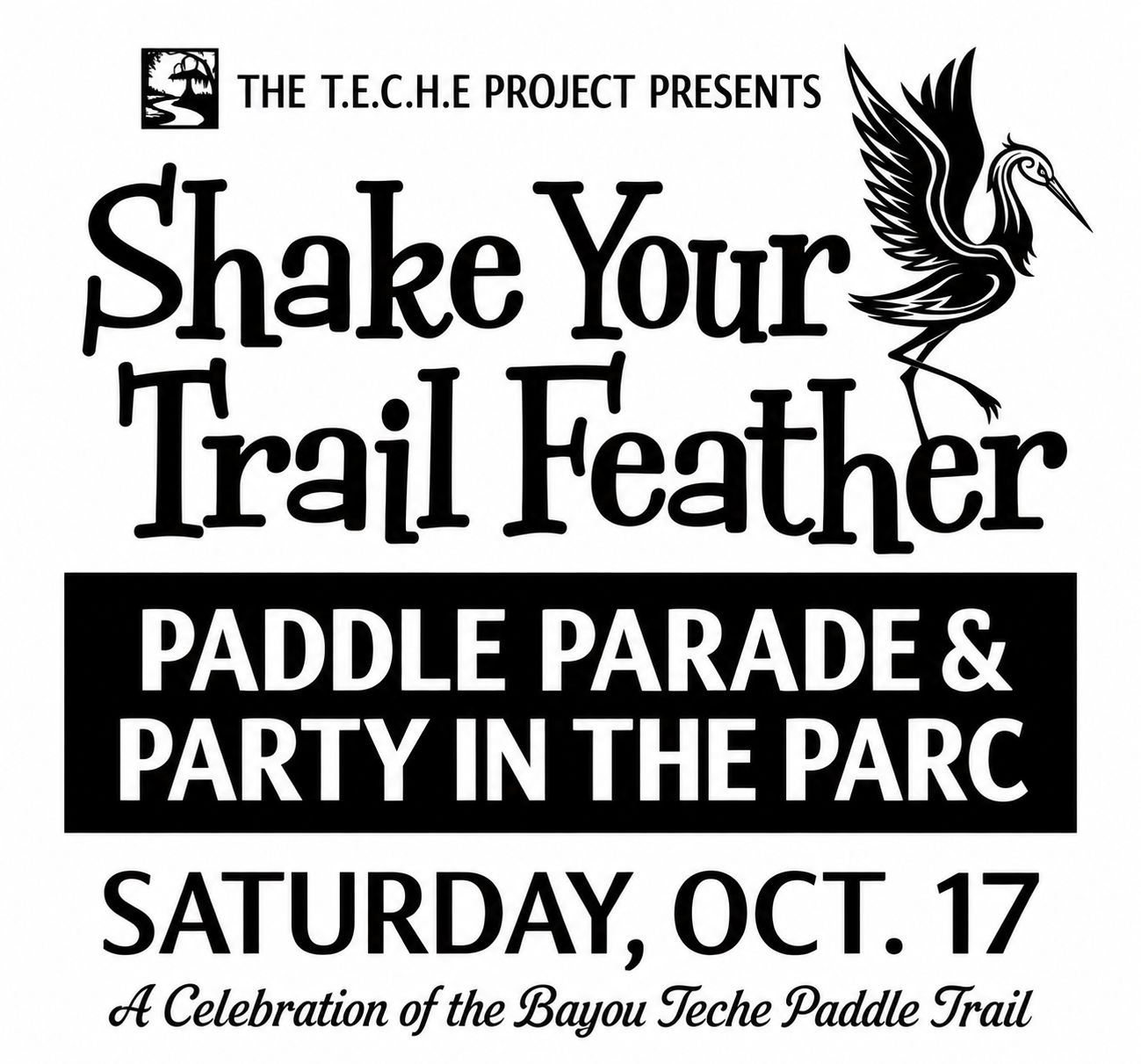
Schedule of Events
Saturday, October 17
Paddle Boat Parade
—Poché Bridge to Breaux Bridge, beginning at 10:00 at Poché’s
—Barges with live music by Amis du Teche and Les Soeurs En Musique
—Paddle or watch from the bank
—Directions, boat rentals, parade information and tickets can be found here
—Paddle tickets, available here, include an event pin
Party in Parc des Ponts
—Breaux Bridge, 11:00 to 2:00
—Chubby Carrier & the Bayou Swamp Band, 12:00 to 2:00
—Food & bar • Kids activities • Merchandise
—Wear wacky feathers for Best Bird prizes
—Kayak & Swag Raffle at 2:00
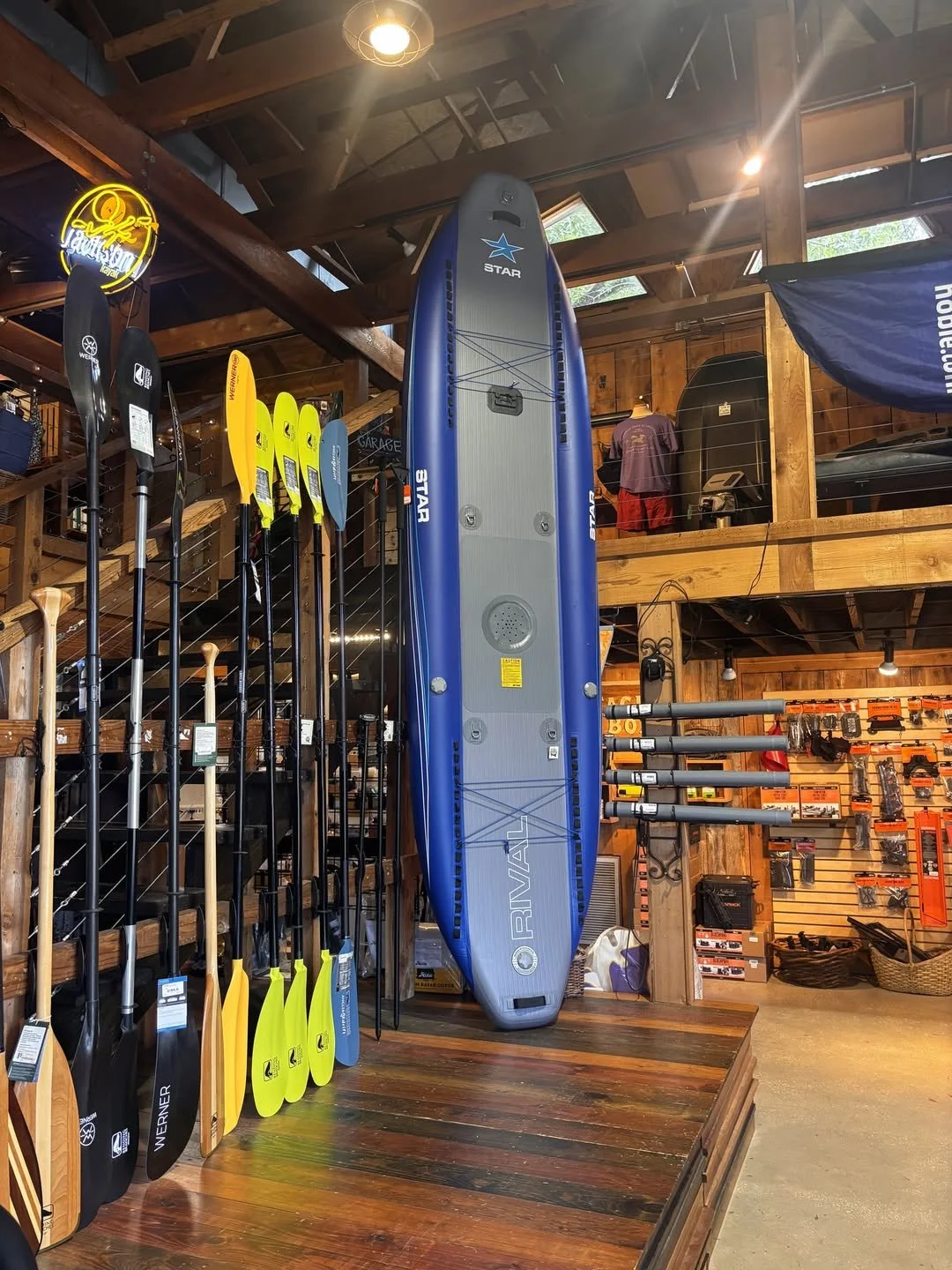
Pack & Paddle donated this inflatable stand-up kayak for the raffle