

Louisiana Bayou Society
Keeping the Lifeblood Flowing
by Jude Theriot
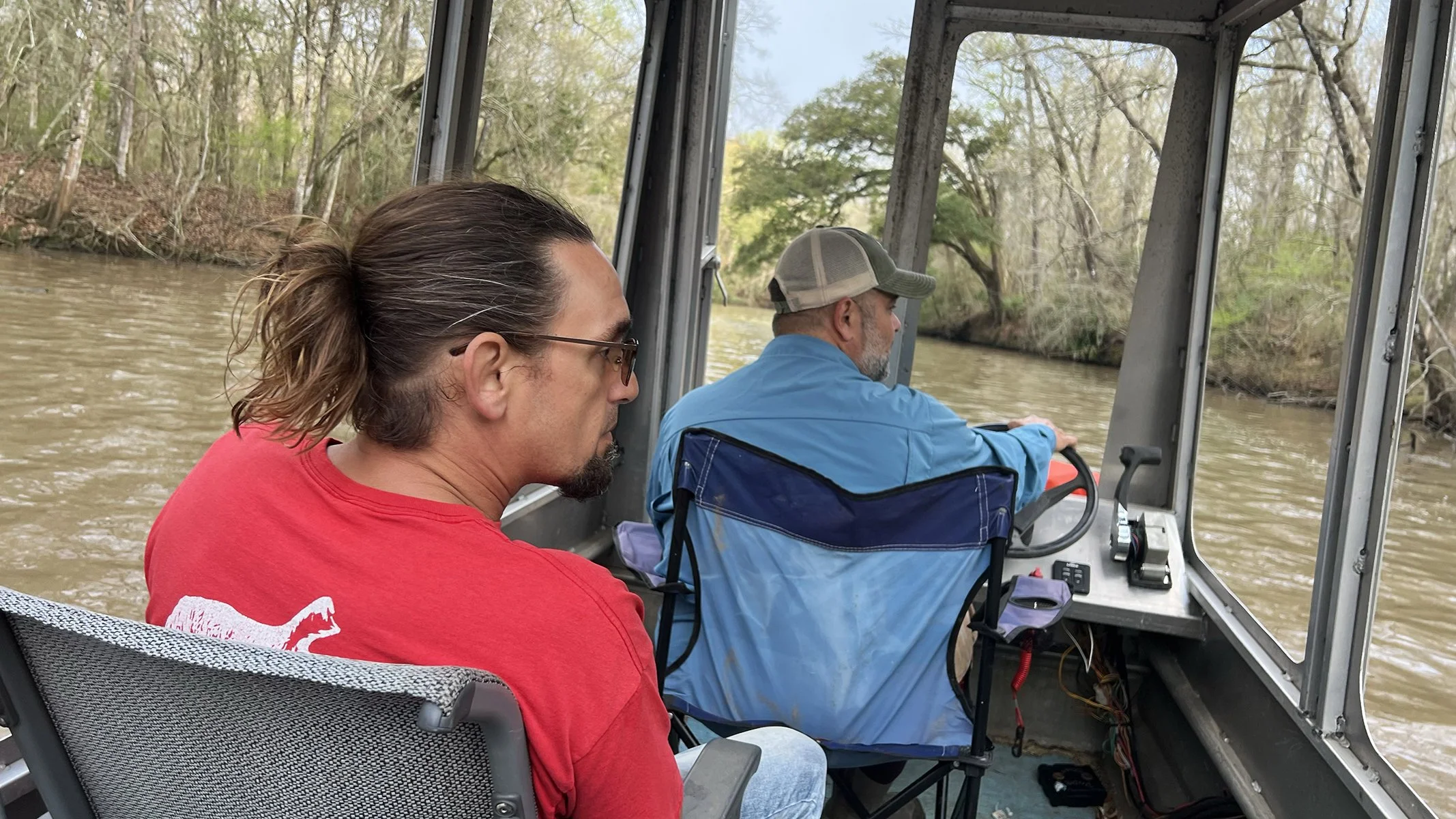
Alex and Dominick Chaillot scouting Catahoula Lake
The story of St. Martin Parish is inseparable from the story of the water that flows through it. Life here has always moved along water, carrying culture, commerce, cuisine and language with it. Seen from above, the network of waterways running through the parish resembles a giant living organism. Two great spines—the Atchafalaya River to the east and Bayou Teche to the west—divide the parish into long vertical ribbons of land and water, and from those two great spines extend hundreds of smaller arteries—bayous, canals, and backwater channels branching through swamp, prairie and forest like so many blood vessels, water flowing through them like lifeblood.
This is where the Louisiana Bayou Society comes in. The nonprofit, dedicated to removing litter and debris from Louisiana’s bayous and their watersheds, has been tending to the health of our parish at water level for a little over a year now. The quiet, persistent work undertaken by cousins Dominick and Alex Chaillot, the organization’s co-founders, has made clear that their mission goes beyond simple beautification. In a place where culture and water are inseparable, their work amounts to keeping a finger on the very pulse of bayou life.
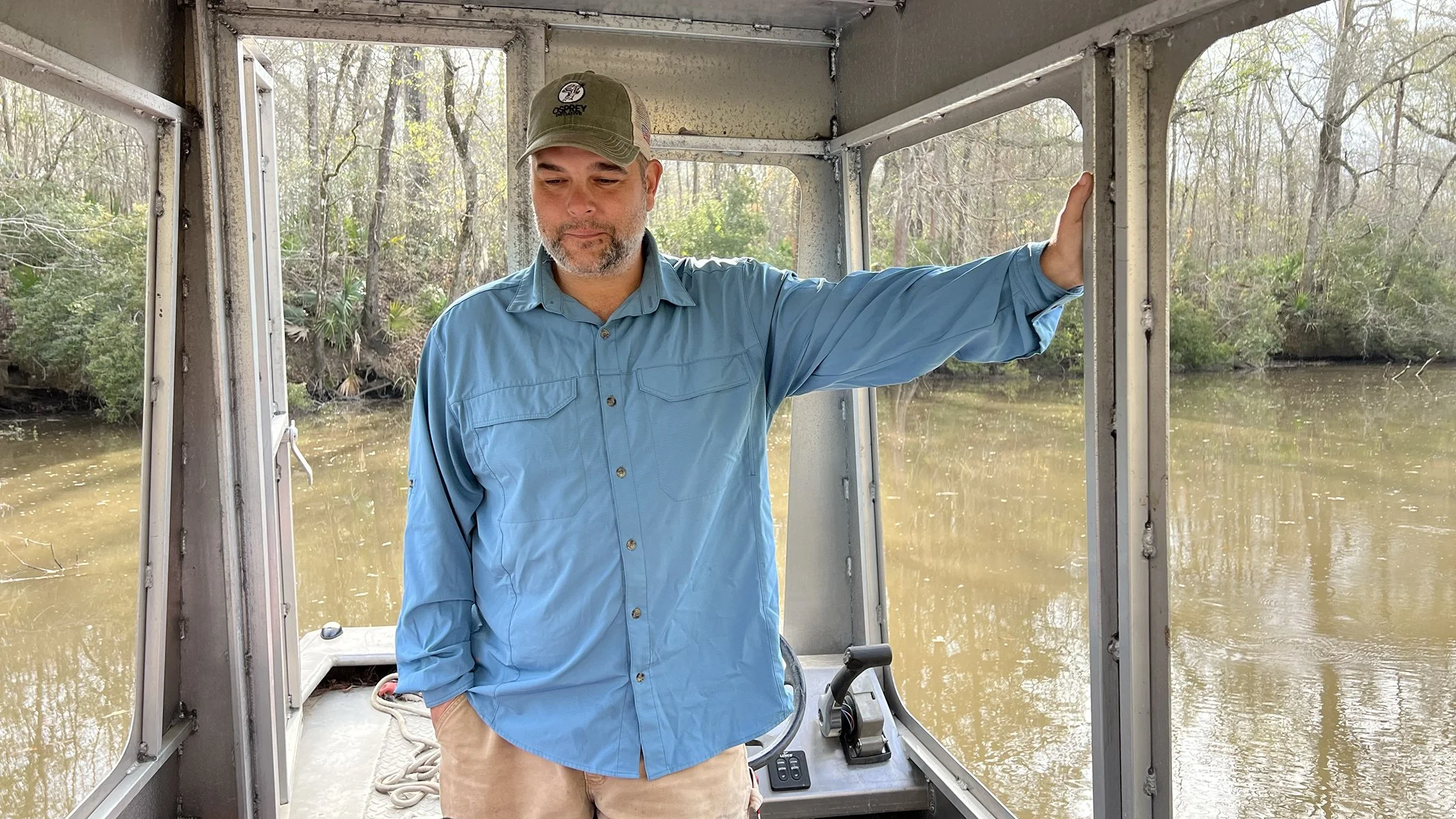
Dominick Chaillot, co-founder of Louisiana Bayou Society
Litter poses a particular problem in bayou country because of the way these waterways move—or more often, don’t move. Unlike large rivers that quickly carry debris downstream, bayous in St. Martin Parish flow slowly, winding through cypress swamp and low bottomland forest. Trash that enters the water snags on cypress knees, fallen limbs, and thick vegetation along the banks. Once caught, it can remain there for years, sometimes decades. During high water or storms, debris from roads, bridges, and communities upstream can be carried deep into the basin’s maze of canals and backwater channels, and when the water recedes, the litter stays behind, caught among roots, tangled in brush, or buried in the soft mud of the swamp.
Some litter has been in the water so long it seems woven into the environment itself, tangled among roots and cypress knees. Tires lodged in canals. Rusted barrels. Ropes. Ice chests. Construction debris. Half-sunken houseboats. It stays there until someone physically removes it.
And more litter arrives every day from the roadways and bridges that cross our coulees and bayous, or from storms that sweep debris down into the bayous. Fast-food packaging. Aluminum cans. Fishing line and bait containers. Broken traps and nets. Coolers, buckets, and scraps of construction material carried by floodwaters.
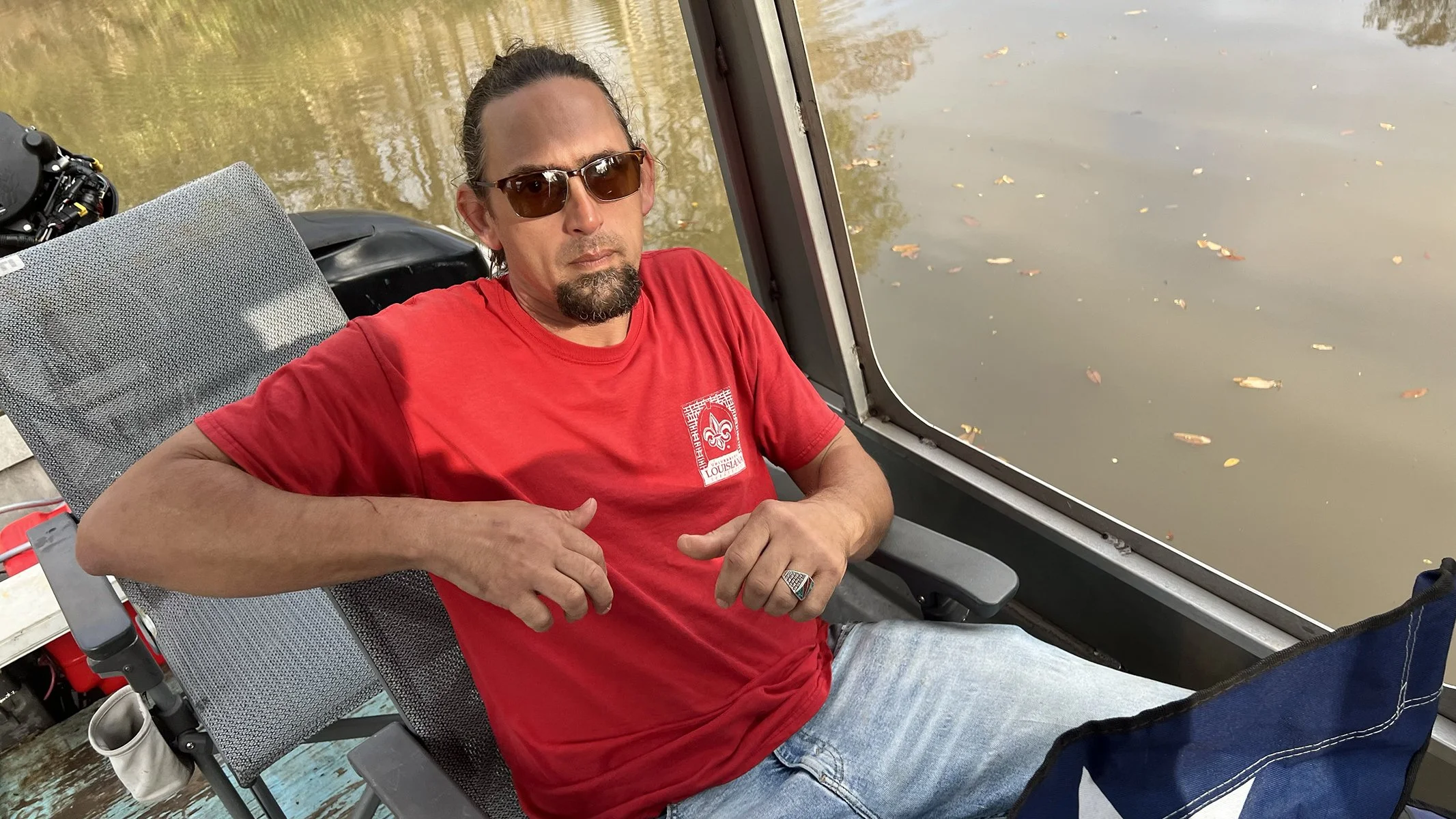
Alex Chaillot, co-founder of Louisiana Bayou Society
The Louisiana Bayou Society’s results, however, are already visible. (Check out their Facebook page to see the results of their many clean-ups.) The canals around Butte La Rose and Henderson, places where the Chaillots have focused their early efforts, look different now.
“People here have noticed in a real way,” Dominick says. “What we’ve done here is palpable.”
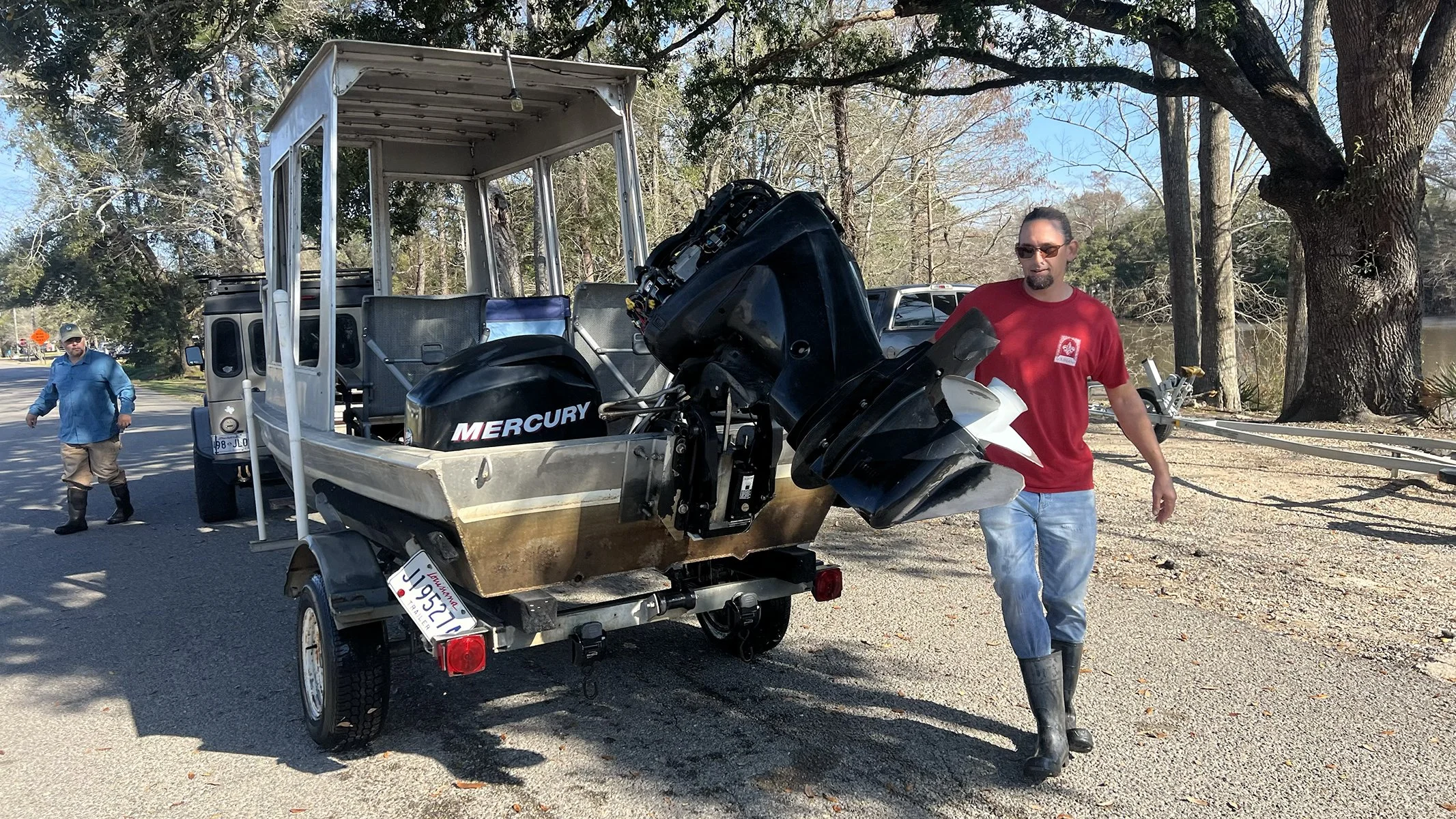
Their approach is straightforward but ambitious. Boats, canoes, grabbers, buckets, and volunteers are the basic tools. A small fleet—among them a pontoon boat and a nimble aluminum craft used to dart between cleanup crews—allows the group to move through canals and swamps collecting debris. But removing litter is only the first step. The larger challenge comes afterward: what to do with it.
For a time, the Chaillots simply stored what they collected. “We had it on a giant 20-foot car hauler in the yard,” Dominick says. “It was piled eight feet high.” Eventually they secured a dumpster on donated land, which they now pay for monthly. Tires remain the biggest challenge. State regulations allow only five tires to be disposed of at a time, and they must be hauled to a recycling facility nearly forty minutes away.
“There’s hundreds of tires I could collect out of this swamp right now,” he says. “I don’t pick them up because I don’t have a way to handle them.”
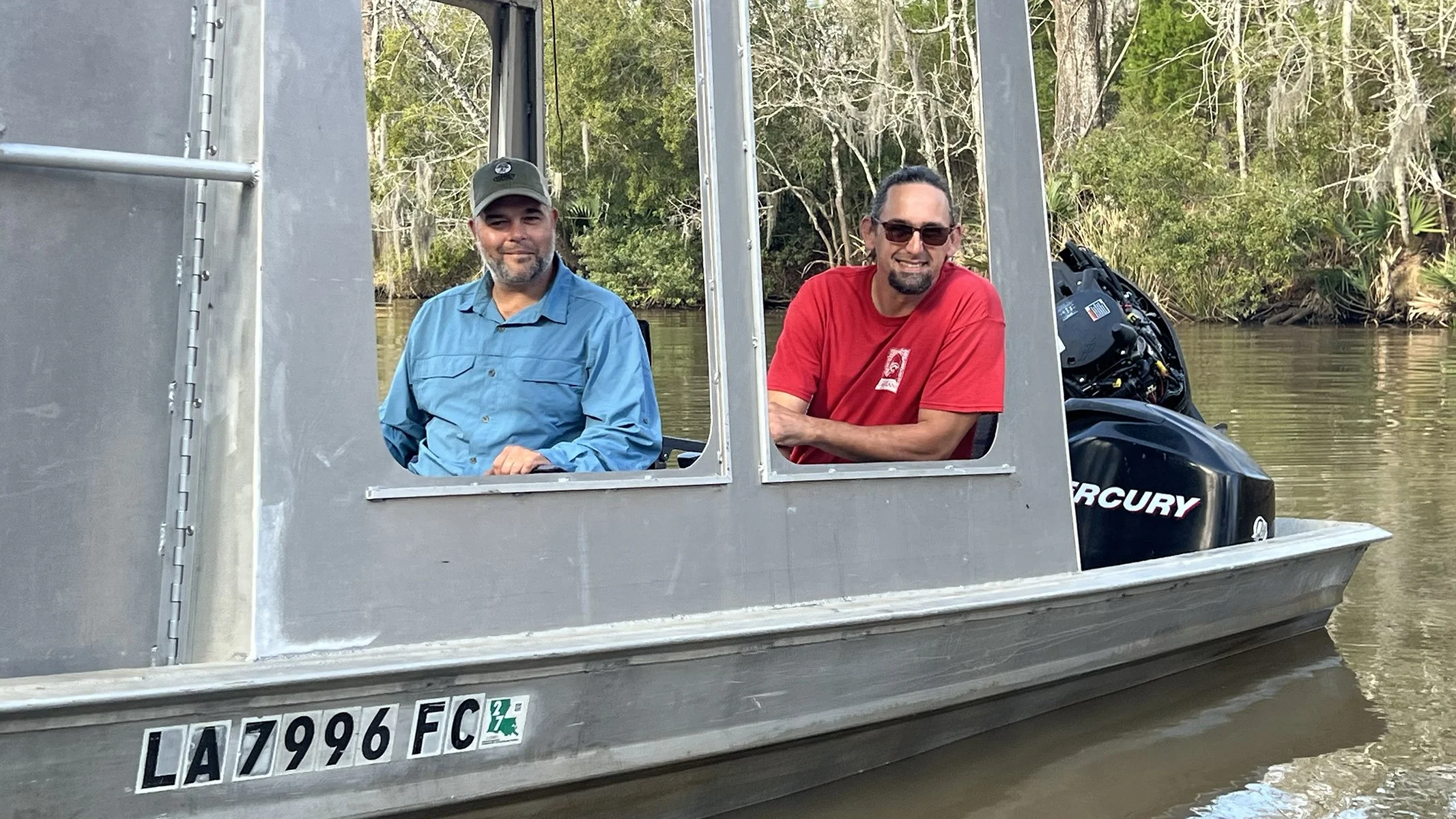
Dominick and Alex Chaillot
Even so, the cousins see cleanup as only one piece of a much larger effort. The deeper goal is cultural as much as environmental.
“Louisiana’s waterways are more than scenery. They are culture. They are livelihood. They are history and future all tangled together. We believe deeply that protecting them isn’t optional—it’s a responsibility. Just picking up litter—what we’re doing out here is about saving our culture,” Dominick says.
In that sense, the health of the waterways is inseparable from the survival of the region’s identity. I didn’t ask the Chaillots if they modeled their society after the Live Oak Society, but the impulse is surely the same. The founder of that society, Edwin Stephens, wanted to celebrate Louisiana’s iconic live oaks and encourage preservation of the old trees. Louisiana’s bayous certainly deserve celebration, too, alongside those majestic plants.
“We’re beyond the point of just preserving,” he adds. “We’re to the point of recovering. We need to start giving this place back so the next generation can have it.”
To do that, Louisiana Bayou Society hopes to build partnerships—with volunteers, civic groups, parish entities and other nonprofits across Acadiana. The model is collaborative: some organizations focus on education, others work through legal channels to ensure the longevity of our bayous, others on remediation. The Bayou Society has found kinship with diverse organizations such as Keep Louisiana Beautiful, Parish Proud, Atchafalaya Basinkeepers, Osprey Initiative, Turtles, Industrial Safety Solutions and the Society of Wetland Scientists at LSU. They have featured Jourdan Thibodeaux, Jude Mequet, Tucker Friedman, Johnny Sonnier, Ash Reese and Ben Pierce in their promotional efforts. Together they form a growing collection of people interested in and oriented toward Louisiana’s bayous.
The Chaillots’ particular role, they stressed to me, is the work on the water itself—picking up trash. “I'm not a hunter, I’m not a fisherman,” Dominick says. “I couldn't kill something if I had to. But I can bring you out there and I can fill up a boat and I can show you the natural beauty and the birds and the fish and the alligators, whatever you want to see, and we can start bringing some more attention to this area. The Boy Scouts are doing a great job of that. We're looking to expand our partnerships with them. We have resources so that they can put a bunch of people out there in canoes.”
Technology may also eventually play a larger role. Floating litter traps—called Bandalongs—are already in use in other places to catch debris before it spreads downstream. Think of them as trash booms stretched across the water. Chaillot hopes to eventually contract similar equipment and integrate it with the society’s work on the basin’s smaller waterways. But for now, the most powerful tool remains visibility. When people see trash being removed from a bayou they love, they begin to care about it differently.
“You start picking stuff up and people notice,” Dominick says. “People appreciate it.”
And sometimes, they begin to help. That, in the end, is the strategy: get people on the water, show them what’s there, and let the place speak for itself. From that point on, the stewardship of the bayou belongs to everyone.
Dominick and Alex Chaillot