

The Wild Girl of Catahoula
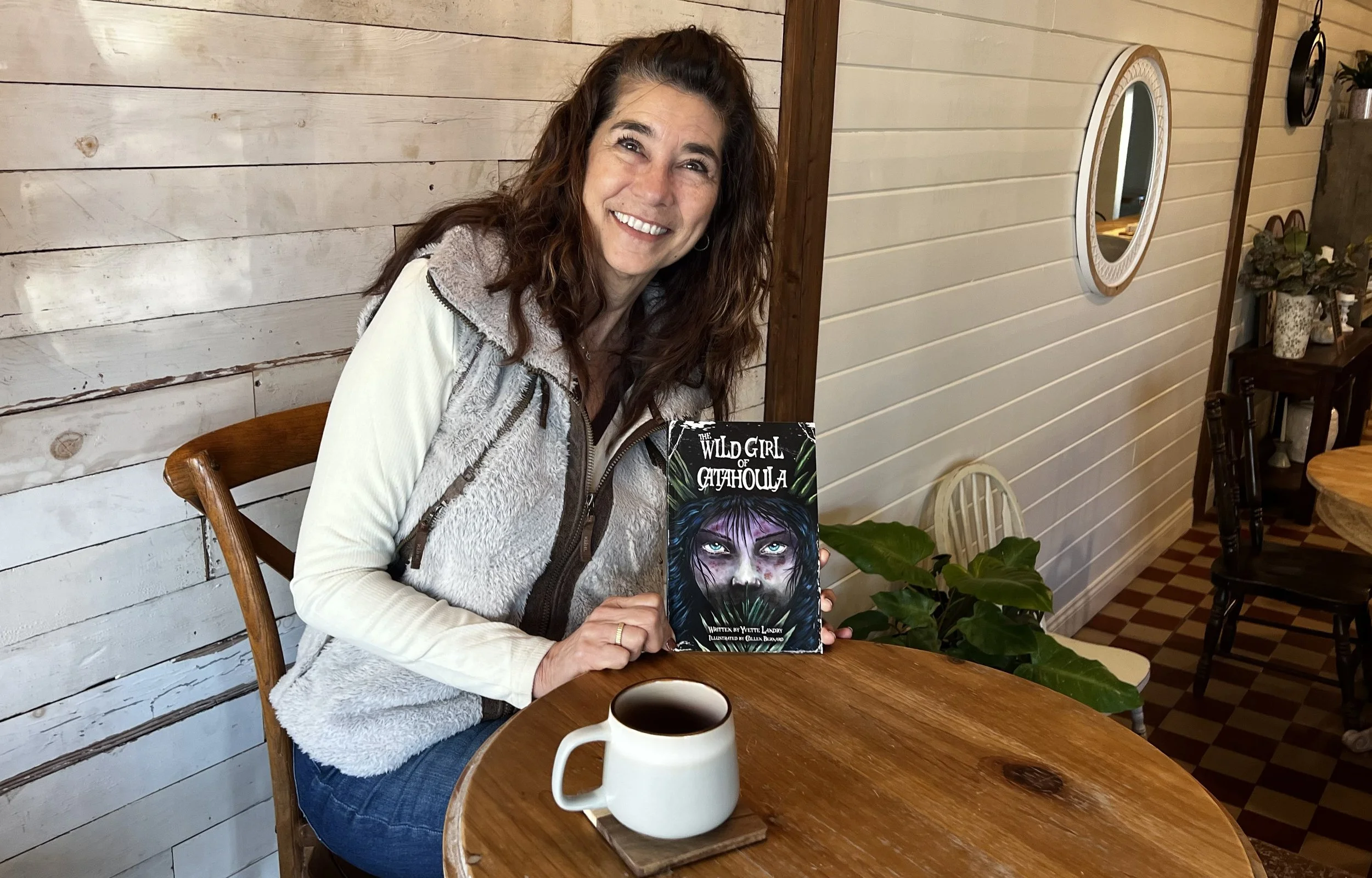
A conversation with author Yvette Landry
by Jude Theriot
Breaux Bridge native Yvette Landry has added a new title to her growing bookshelf with The Wild Girl of Catahoula, a work of juvenile fiction inspired by reported sightings of a feral girl in late-19th-century Louisiana. The book, beautifully illustrated by Cullen Bernard, follows her earlier children’s titles, The Ghost Tree and Madame Grand Doigt. I sat down with Yvette to talk about the origins of her latest book, what makes Catahoula such a singular landscape, and the childhood stories that have haunted her imagination.
How did you come to write The Wild Girl of Catahoula?
My first book, which was The Ghost Tree, came about when I was playing a gig in Maine. It’s pretty wild because I never thought I was going to be a musician, and I certainly never thought I would be a children’s author. I mean, that was just never in the cards. So I was teaching at a music camp, a Cajun music camp, and I had just started writing my own songs. They kind of came out country, you know, folky country, like old school country. Anyway, there was a gentleman there who was teaching at the same camp, this virtuoso guitar player. He could play classical, he could play jazz, whatever, and so we were in a building one night, and I was in the stairwell singing some of my songs, practicing, you know, workshopping, because the acoustics in there were so great, and I didn’t realize that he was in there, so he comes up and he was very . . . I don’t know how to say it . . . haughty? I guess haughty would be a good word.
And so he comes up to me, and he tells me that he’s teaching at the camp. He said, “I see that you’re teaching at the camp as well. I live in Maine, and my wife and I, we do this series where we invite guitar players up and singers up to do their shows there, and it’s mostly virtuoso guitar players, and obviously you’re not a virtuoso guitar player, but I think you might have something that would do well.”
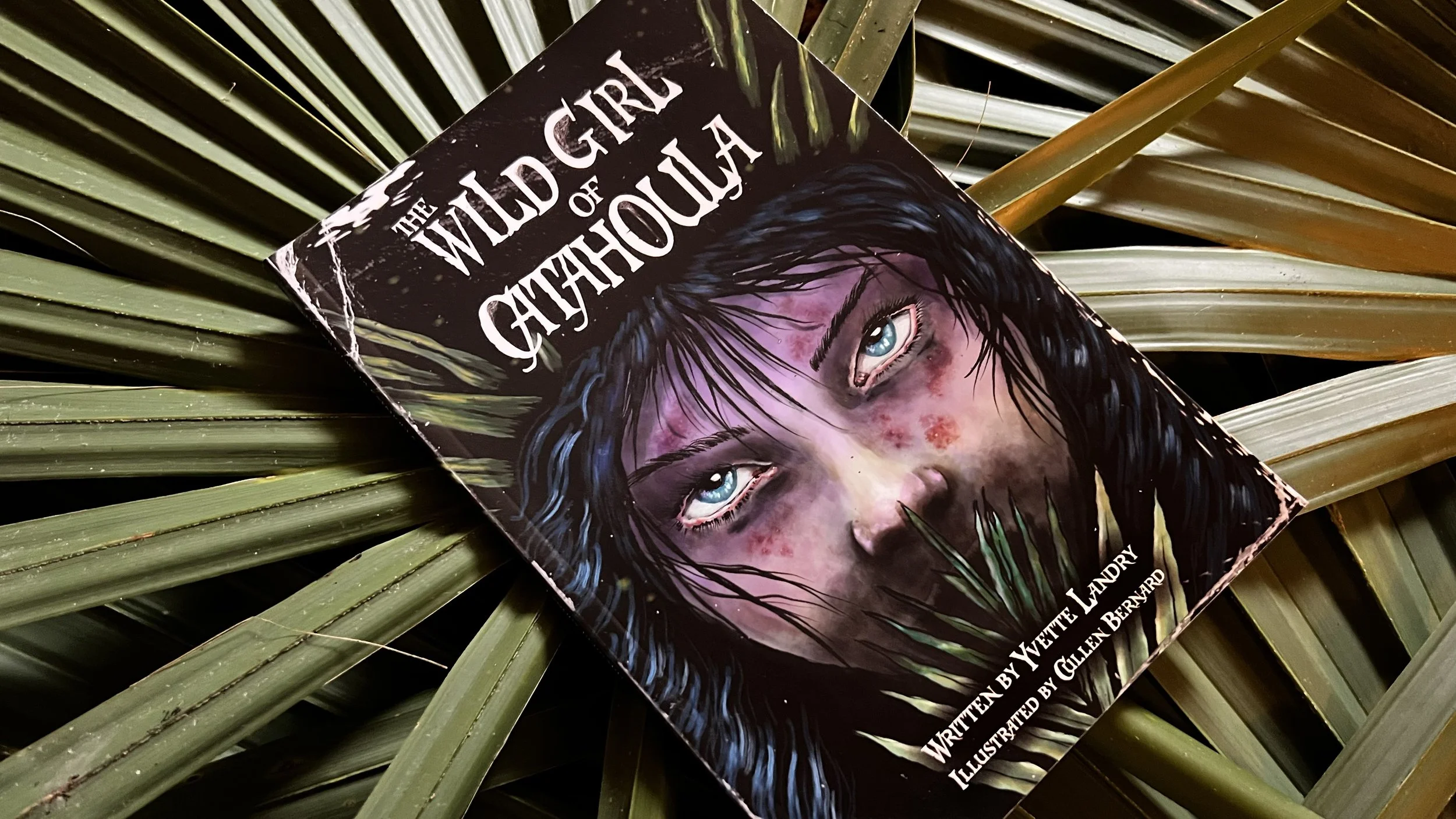
Wild Girl of Catahoula, Written by Yvette Landry, Illustrated by Cullen Bernard, Pelican Publishing 2025
I'm sitting there, looking at him, thinking, “Who are you??” And so I said, “I'll think about it, and I’ll be in touch.” I didn’t hear from him for about two months, and then all of a sudden I get a phone call from this guy saying, “I talked to my wife and, yeah, we think you would be a good fit up here. You could stay with us. We’ve got this three-story house.”
So I’m thinking about it. Do I do something like this? I’m just starting to write songs. I don’t know if my songs are any good. And then I sat for a minute and I said, “You know what? What’s the worst thing that could happen? I go over there, I bomb, you never ask me back again, big deal. You know what? If you’re crazy enough to ask me, I’m crazy enough to go.” So I ended up going. I took my guitar to Maine, flew up there, and I get to the airport, and it’s a very small airport, and I can see the guy walking down the hall, and there’s these two little boys running down the hall, and they’re screaming, “Hey Asian lady!”
I’m looking at him. I said, “Why are you kids calling me Asian?” And in his pretentious way, he said, “Well I told the boys that the Cajun lady was coming, and they have no idea what a Cajun is, so they just think you’re Asian.”
So they called me Asian lady all weekend. And we get to the house, we’re driving for about an hour to get there, and I mean they’re just. I mean they’re boys, and they’re excited to have a person at their house, and they’re screaming and doing all this other kind of stuff, and we get down, they park the car, the boys jump out, they’re screaming, “Asian lady, do you want to play ball with me, and they have this bucket of tennis balls, and they’re throwing tennis balls at me. I’ve got a guitar. I’ve got all this stuff. It’s wild, and then all of a sudden the window from this gorgeous house flies open, and this woman sticks her head out of the window and screams, “Oh my god, Levi, do you have to go to the potty?”
And I’m thinking, "Oh my god, can I just get back on the plane?”
So here she comes, she runs out of the house, she grabs this child, she throws him over the shoulder, and she starts running into the house, and this kid stiffens up like a board and screams at the top of his lungs. He says, “I’m not going unless the Asian lady comes.”
So she puts the three-year-old on the little potty on the floor. It’s a half bath, like this big the five-year-old comes up and sits underneath the sink cross-legged, she pushes me in, and I’m kind of squeezed in between the wall and the toilet, and she goes, “Thank you,” and she closes the door. So I’m sitting in this little bathroom with these two little boys staring at me. I’m staring at them, just arrived at their home, have no idea what’s going on, and the little one looks at me like this gentleman, like that, and he goes, “Asian lady, tell me a story, and so in that moment I was thinking, “All right, well we got this tree in Isle Labbe.” My grandparents had the second largest live oak in this state, and so I was there, “Well I’ll make up a story about the tree.”
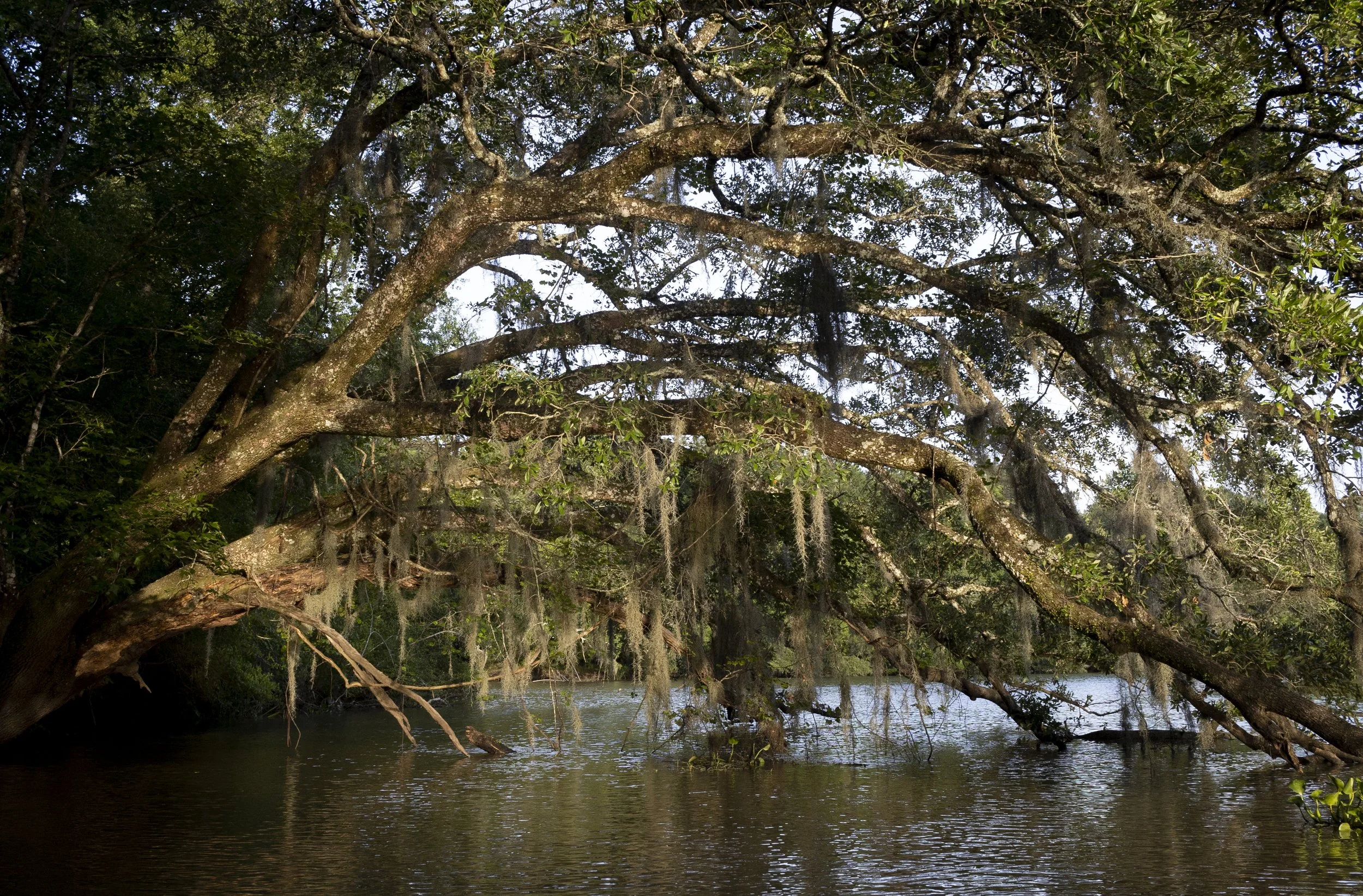
Catahoula Lake, photo by Jude Theriot
So I did. I made up a story about The Ghost Tree, and how it’s in the Catahoula Swamp, and how on Halloween if you go into the swamp—where you’re not supposed to go—it’ll turn you into stone and eat you. One thing led to another, and it became a book. So then I got interested in Cajun folklore, and I started thinking about the stories that my grandparents would tell me. My grandmother used to tell me the story about Madame Grand Doigt. Are you familiar?
I’ve heard of Madame Grand Doigt. I’ve always though that was such a terrifying name!
Okay. So, my grandmother, she would always tell us growing up, “If you don’t behave, if you don’t go to sleep, Madame Grand Doigt is going to get you.” And I would always question, well, that’s not true. She can’t do that. And then when I got older, I was there, “Well, even if she would, what did she do with the kids whenever she would take them?” And she would never tell me.
It was just, “Madame Grand Doigt is going to . . . she’s going to take you.” And so for the second book, I thought, “What if I continue the story and say what happens to the kids after Madame Grand Doigt takes them?” So that was the second book. Then in looking up the folklore, I read the story about The Wild Girl of Catahoula. And so I did a little bit of digging, and what I found was that there are three newspaper articles that are written about her—two from Catahoula Parish, and one was written in the St. Martinville Gazette, in the 1930s, I believe it was. Two sheriff’s deputies had spotted this feral girl in the swamps back in Catahoula, and she was always described as carrying a knife, and she was somewhat deformed. She had a messed up foot, and she was just kind of feral. She would take trinkets and small livestock from the homes around and the families surrounding that area.
But there was nothing else that I could find about her. So the way the book tells it is that my grandfather, when I asked him about her, he basically said, “Well, I’ll tell you about the time that I met her when I was a young boy in the swamp in Catahoula.” And so that’s basically what the story is, what happens to him. And it’s a story about my family. It’s based on a lot of truths, for sure. And what I tell everybody is, to this day, I don’t know if it’s true or not. I really don’t. It’s plausible that that could have happened to him. Did it? I don’t know.
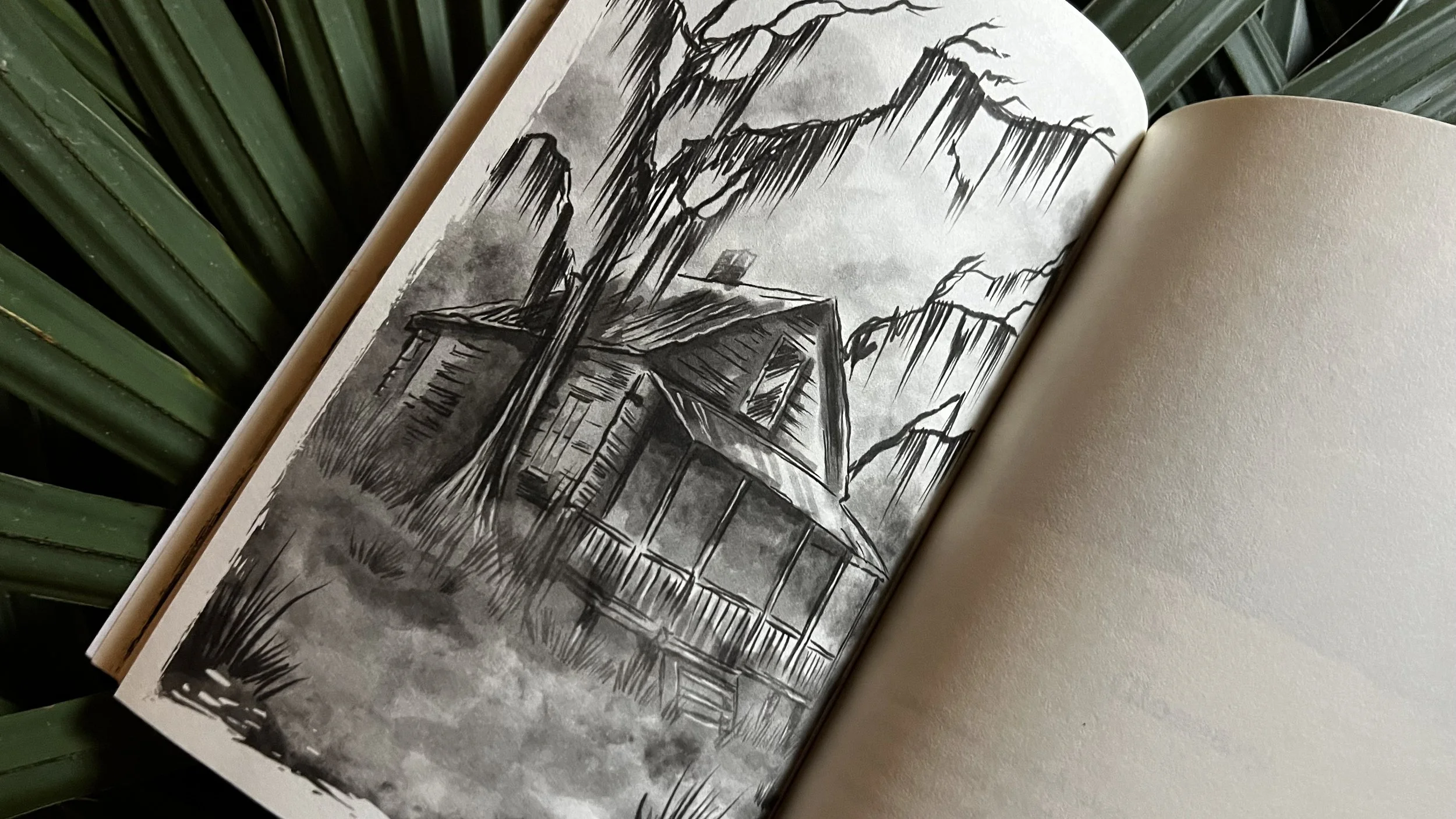
Wild Girl of Catahoula, Written by Yvette Landry, Illustrated by Cullen Bernard, Pelican Publishing 2025
It reminds me of the way that the Evangeline myth has been told and retold, and the way that the Evangeline Oak came to be in St. Martinville through the retelling of the original story. The author says that it’s his grandmother that told him the story, so it’s merging history and the myth to the point where it isn’t clear if it’s real or not. Maybe that’s something particularly appropriate about St. Martin Parish or Catahoula.
Yeah, I think it lends itself . . . It’s a very special place, you know. You’re not going to find another place like it in the world.
I agree.
You might find the landscape somewhere, but you’re not going to find the people and the culture and the language and the music and the stories. One of the questions that they asked me Saturday at the book festival was, “Who is your favorite Louisiana author?” And I said, “I can’t tell you one,” I said, “but I can tell you that my favorite stories come from the people, like the grandparents or my friends’ grandparents or the great-grandparents or the older people that when you’re at the coffee shop and they’re telling you those stories, you know?” Those are the ones that get me, not necessarily the people that write them. It’s the people that tell them.
And the family stories and the secrets.
Yes.
And the juicy, you know, like the stories that you shouldn’t be telling.
Right, right. And then there’s always that, there’s always that nagging feeling is, well, is that true? Or is that not true? Because it could be true. What are we supposed to believe?
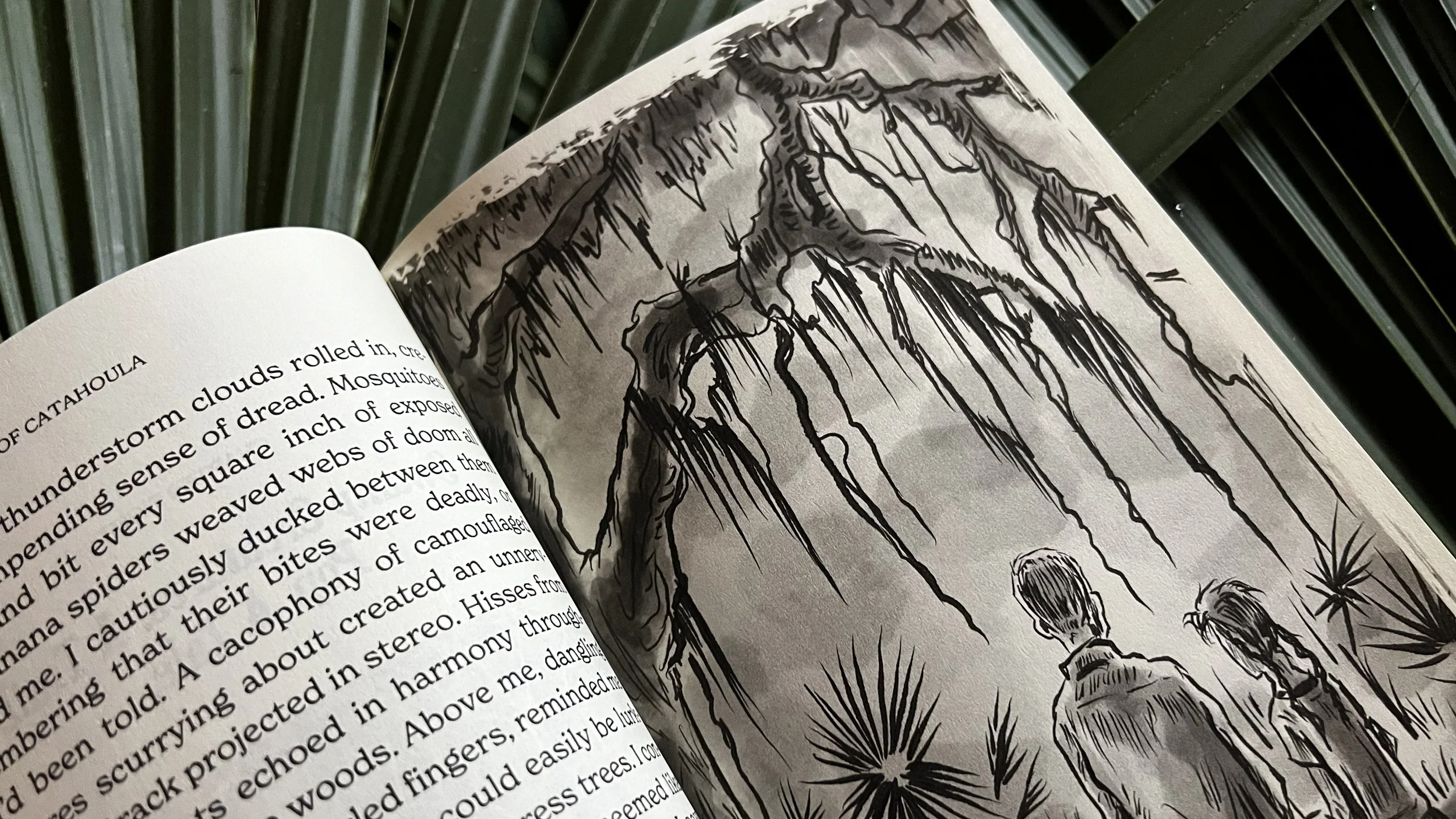
Wild Girl of Catahoula, Written by Yvette Landry, Illustrated by Cullen Bernard, Pelican Publishing 2025
I love the illustrations in the book.
So Cullen goes back to my first book, The Ghost Tree. It was just intended to be a story for those little boys, and when I ended up having a wonderful weekend with the family, and with the boys, and the whole concert, it was just, it was a magical experience over there. So when I got back, I thought, “What can I do to help them remember the Asian lady?” So what I thought I would do is, I would get a couple of stories from over here that were written, little short stories, and I would write up my own story and put it in a binder of stories from Cajun Land, basically, and give it to them. And in that process, somebody said, “Oh, well, no, you need to turn this into a book.”
And so I said, “Well, I need an illustrator” And I didn’t know anybody. So I came to Breaux Bridge to Kelly Guidry over here. And I was looking for something for my brother over there for his birthday, and I thought, “Oh, well, maybe I’ll just ask Kelly if he could illustrate.” And so I told him about the story, and Kelly said, “Oh, I would love to,” he said, “but come see.” So he brought me in the house, and he brought me to his computer, and he typed in something, and he pulled up this picture, and it was a swamp scene with a snapping turtle and snakes and just the moss and the whole swamp thing. And he goes, “I would love to, but this is the guy that you need to illustrate this book. His name is Cullen Bernard. Here’s his card.”
So when I met Cullen for that first book, it’s like he could get into my head and he knew exactly how I was envisioning what I wanted these illustrations to be. And so when I did the second, I was so pleased with his work, I asked Cullen to do the illustrations again. And he said, “Oh, yeah, yeah, yeah, great.” Because he’s into that kind of stuff too, the swamp lore, the rougarous and all that.
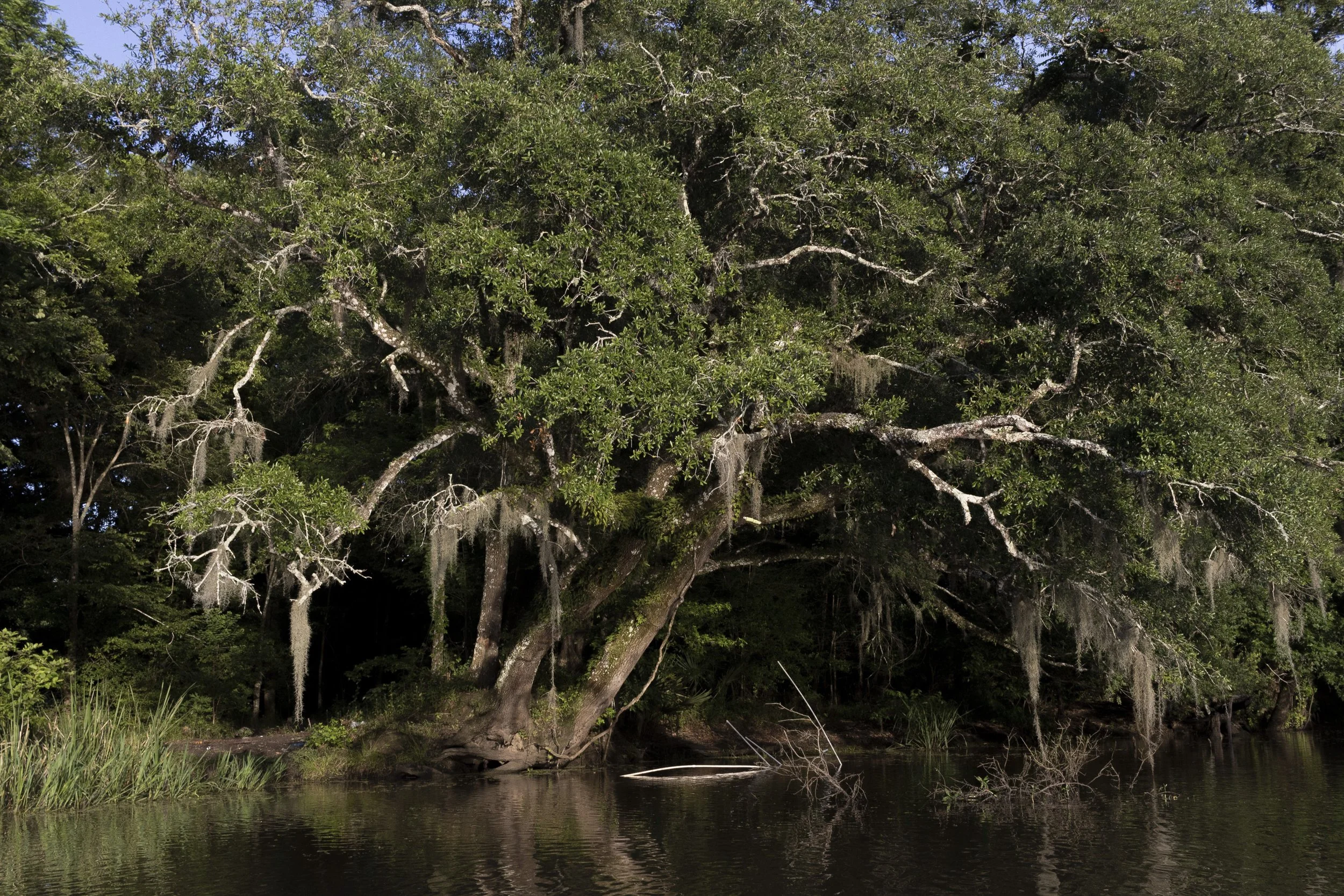
Catahoula Lake, photo by Jude Theriot
Is he from Lafayette?
He’s from Lafayette. And we have a lot in common. He was a musician and, we just matched in a lot of ways. So when this book came out, I wasn’t sure that I was going to be able to use him because the other books were for younger kids. They were in color. The illustrations were more cartoonish, and that’s not what I wanted for this one. This one is for your middle readers, the tweens. I didn’t want a fully illustrated book. I only wanted two illustrations for each chapter, a small one with the heading and then a larger one. Being an educator, and just knowing kids of today and their attention spans, they would much rather have a phone in their hand than a book in their hand. I knew I needed something with illustrations to keep them in, but at the same time, it didn’t need to feel like they were babies with a picture book, you know?
So when I asked him about this, I said, “Well, I really want a pen-and-ink kind of thing, black-and-white, and I want it more for that middle age reader. Is that something you could do?” And he was there, “Oh, God, yes.” He said, “I would love to do that.” So, you know, again, I guess the manuscript, the text, was descriptive enough for him to see the direction that I was going in. And he’s got such a great imagination. I just, I let him at it. And I knew I wanted the cover to be in color, and I wanted it to grab everybody. And so he did exactly what I asked him to do. It’s awesome. It’s an amazing cover.
I wanted something that when there’s three hundred other books on the shelves, that people are going to look at the cover and go, “Oh, what is that about?” And I didn’t know how to get there, and he said, “Well, I have an idea.” And I said, “All right, well, you do it. You know what I’m getting at. I just can’t put it into words.” And he came up with that cover. Home run. That’s it. That’s what I wanted.
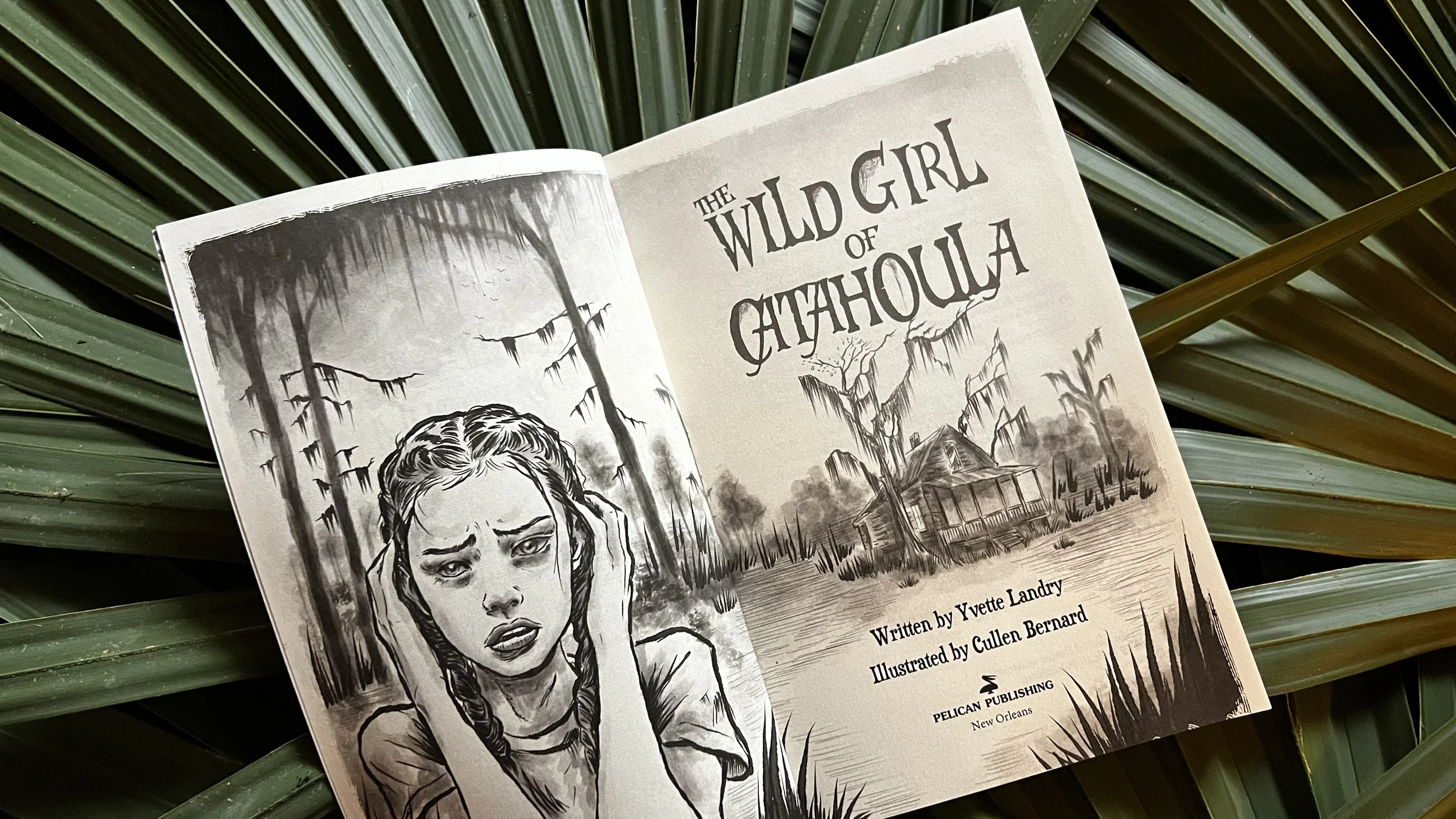
Wild Girl of Catahoula, Written by Yvette Landry, Illustrated by Cullen Bernard, Pelican Publishing 2025
Yeah, and I love the worn look of the cover . . .
He did that as well. He said, “I want it to look like it’s been worn and that people have been reading it a lot.” But we just, I really feel like we make a great team. And we already have another book on the way. We signed a contract, and it should be out in March, I think. It’s for the little bitties. It’s not quite as scary.
What would a reader take away from this book?
I’ve been an educator for thirty plus years, and so I wrote the book with students in mind. You know, you’ve got kids who have short attention spans and who aren’t readers. So I made the chapters short, so that you could read a chapter a day if you wanted to, a night. or a couple of chapters. And for those people who don’t particularly like to read, you feel like you’ve accomplished something. I also included a glossary with those Cajun French terms or those terms where even people in this area might not be accustomed to.
You know, Cullen was, we were talking about that at the book fair, how in, I think it was the second book that I wrote, I mentioned pain perdu, and he had to look it up. He didn’t know what that was. And he’s from this area. He asked his dad, and his dad said, “What do you mean you don’t know what pain perdu is? I used to eat that all the time.” And Cullen said, “Well, did you ever cook that for me?” So even people from here don’t know some of the terminology. It’s getting lost. That was important to me. And then I know teachers, they’re so busy, they don’t have time to sit and pull questions and do all that stuff, so I included a reading guide in the back as well.
Now back to your question. What do I want them to take out of it? That’s a good question. I never thought about that. I could answer that on so many levels. I mean, in one sense, just what I feel is a connection to this place. That is important to me. It truly is. You know, these are all stories that have been around forever. I mean, the wild girl has been documented since the 20s and 30s, and she could exist today. And I think those tales were told to keep kids safe. You know, don’t go into the world. But told in an interesting and suspenseful way. If mom says, “Don’t go in the swamp,” what’s the first thing you’re going to do? You’re going in the swamp. Why? Because mom told you not to, or dad told you not to. That’s what you’re doing. But this way, I think, you know, I think our grandparents had that figured out. If we put a little bit of scare into them, they might think twice about doing that. I know it worked on me with Madame Grands Doigt. I wanted to hold on to my fingers and toes.
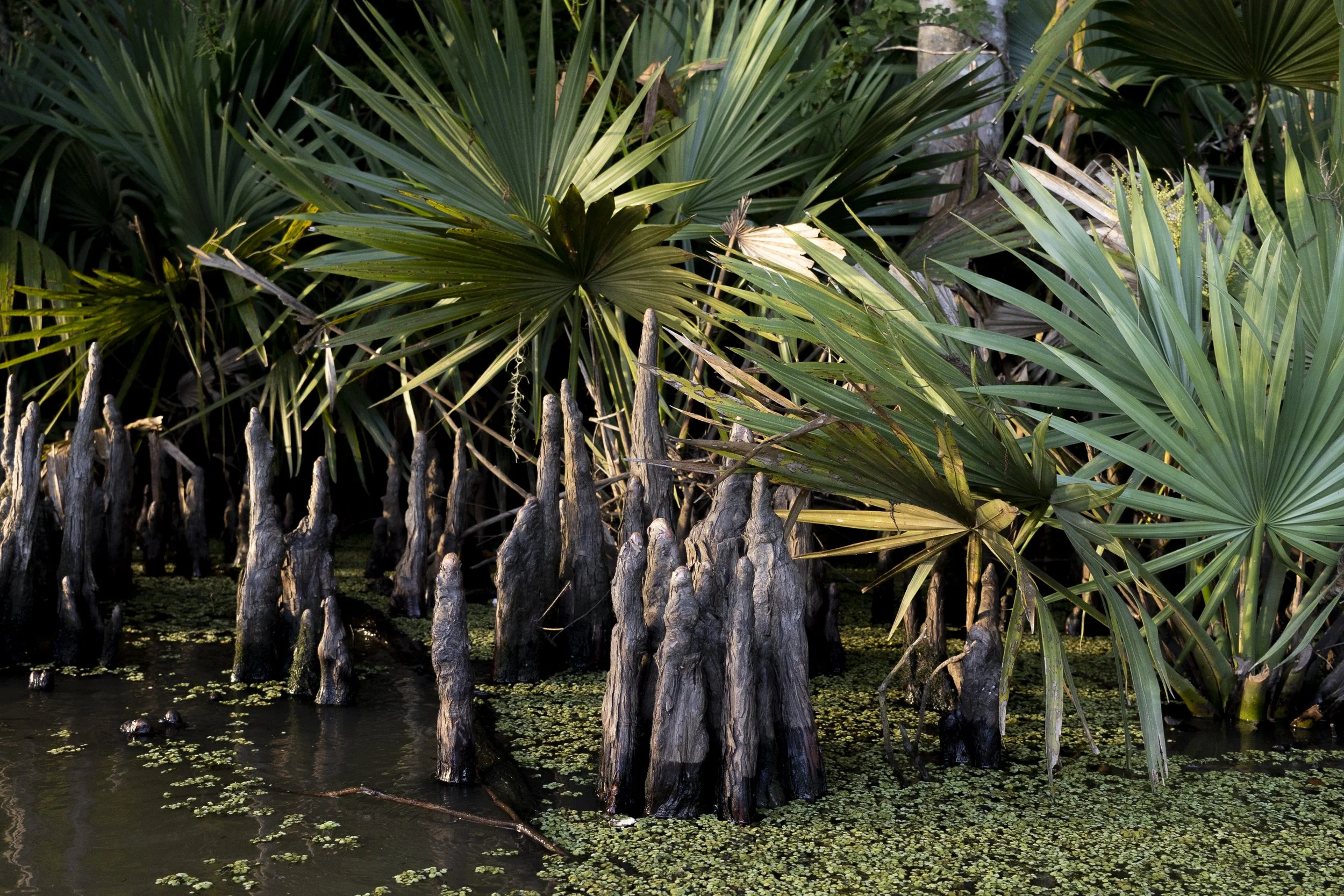
Catahoula Swamp, photo by Jude Theriot
I also feel like we want those wild places and those wild people to stay wild.
I want there to be a wild girl out there. I want to go into the swamp and maybe look around that tree and see if she is there. And everybody wants to be a little scared, I think, and intrigued. And also, you’d be surprised how many people, when they come and they ask about the book, one of the first questions I’ll say is, “Well, where are you from?” I’m from Baton Rouge, or I’m from New Orleans, or I’m from wherever. And my first question is, “Do you know where Catahoula is?” And if they’re from this area, this Lafayette area, St. Martin Parish area, of course they know where that is. But outside of that, not too many people know about Catahoula or where Catahoula is. It’s like a place that is nowhere else. It still feels kind of hidden and out of the way.
Well, it is. Even today, what I like about living there . . . there’s no traffic, it’s quiet. You’re surrounded by lakes and bayous, and there’s nobody out there. You have it all to yourself.
It’s funny because whenever I, and I’m here in Breaux Bridge, so I’m not in a big city by any stretch, but it’s getting bigger and more congested as we speak. But whenever I need to get away, my go-to place is Catahoula. Like, I will get in my car and I will drive to the park and just go sit by the lake. That’s my quiet place. There’s a feeling there that you can’t put into words, but you can feel it.
You can feel it. And anybody would notice it. I’ve seen people visiting Catahoula for the first time, and I’ve seen how they react to it.
I’ll make that trip by Greg Guirard’s. I’ll make the block around there, go on the levee and come around and just . . .
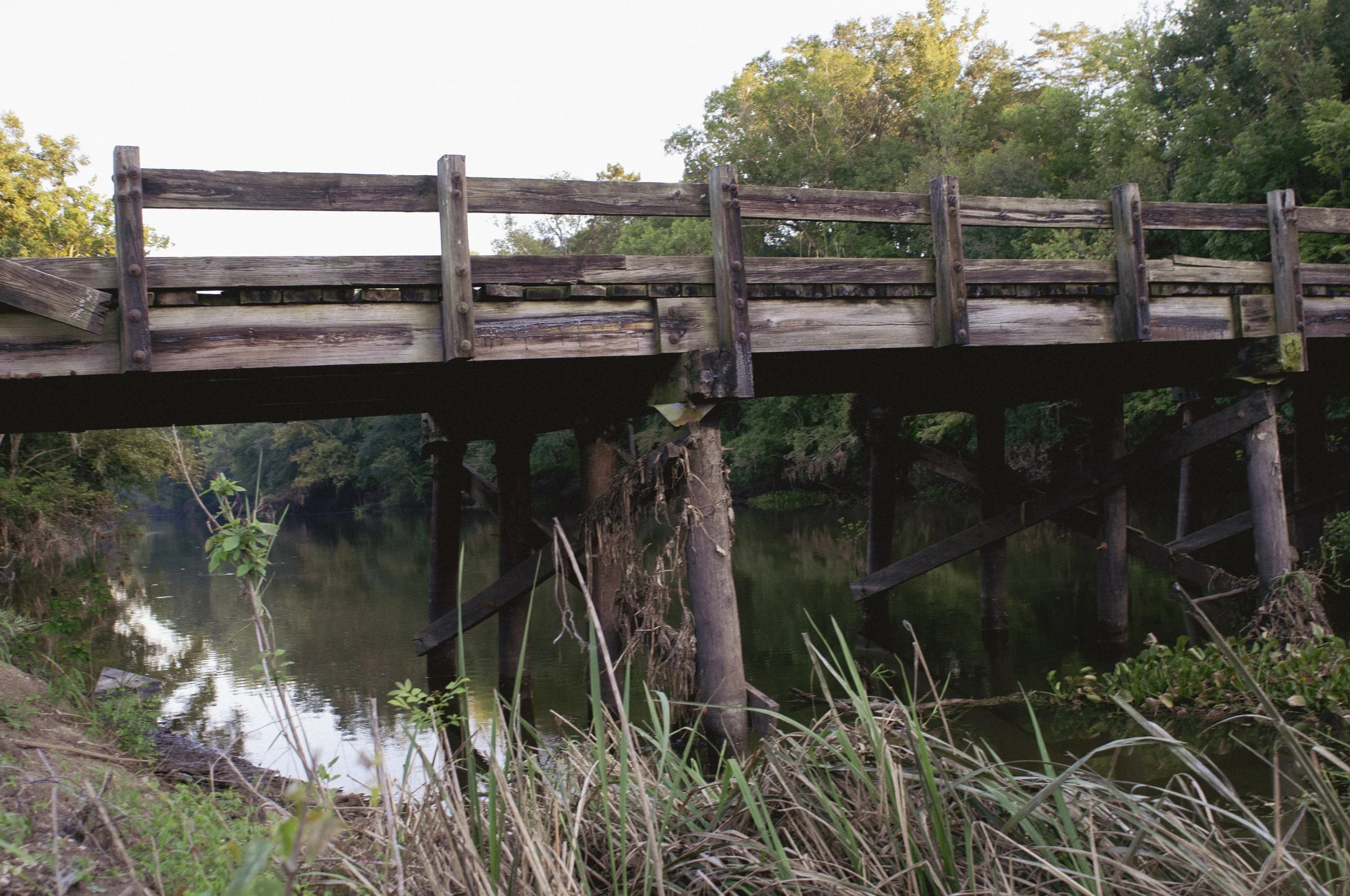
Old Bayou Mercier Bridge, photo by Jude Theriot
And you remember the old wooden bridge across Bayou Mercier? It’s no longer there, but I still feel the ghost of it.
Yeah. Right there. Absolutely.
Yeah, I put my kayak in. There’s not a landing right there, so I have to just drag it down the bank right where, you know, right where Greg’s place is on the bayou.
In the back of my mind, I remember Greg used to have an alligator that would come up to his house, and he would feed it marshmallows.
Oh, yeah, I always see alligators right there.
He would feed them marshmallows. And so in the back of my mind, that’s another little potential book in the making.
Have you thought about, have you written a song about the Wild Girl of Catahoula?
I don’t really sit down and think about writing songs. They just come to me. I honestly don’t think about writing books either. They just, the ideas, they just come. Matter of fact, after I wrote Madame Grands Doigt, I had the idea for The Wild Girl of Catahoula, and I wrote probably about three or four pages of it, and nothing else came, and I didn’t like where it was going. So I just set it off to the side. And it was probably four years. And I woke up one morning and I just wrote the whole thing. And it went in a totally different direction, completely different direction.
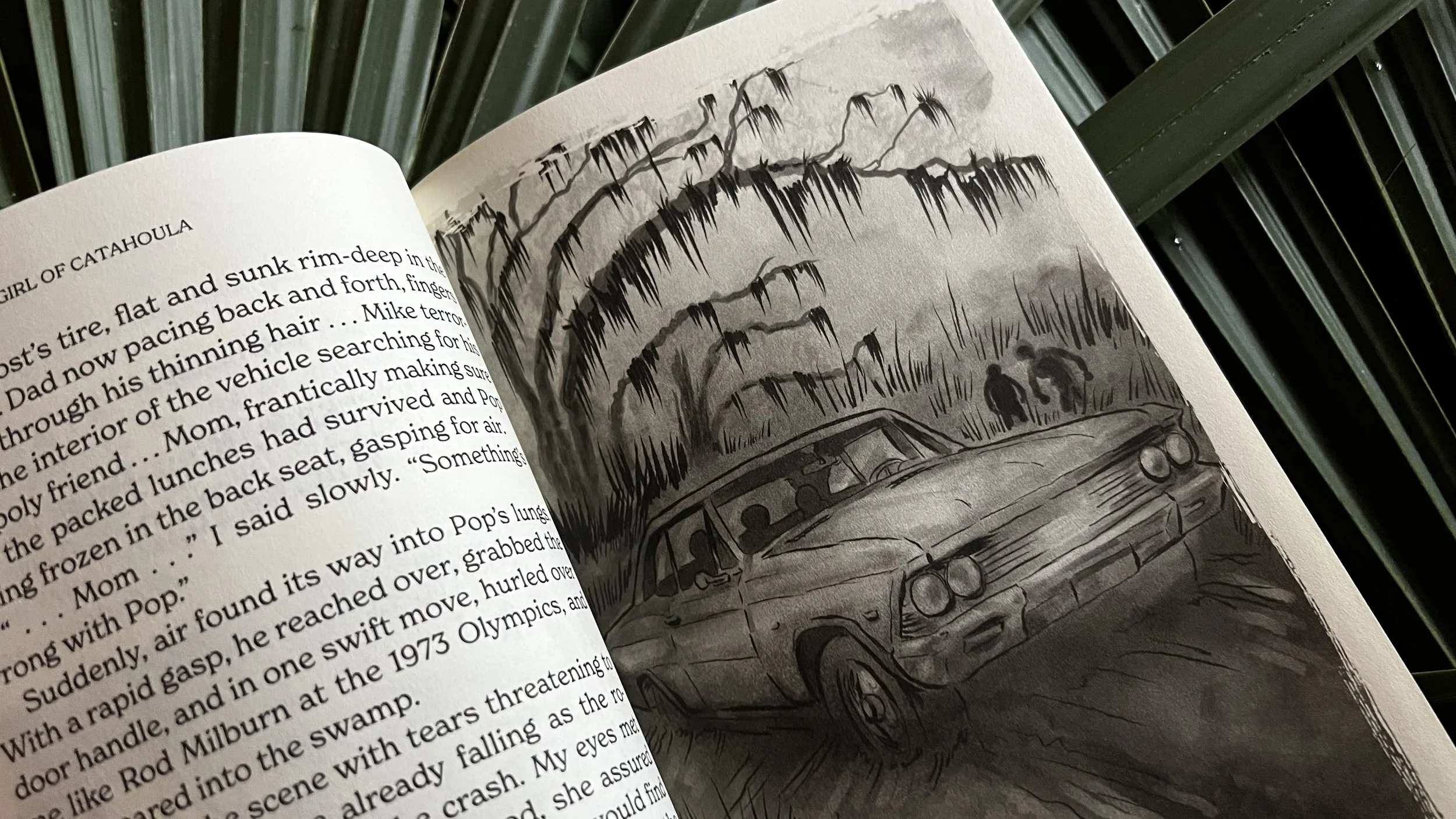
Wild Girl of Catahoula, Written by Yvette Landry, Illustrated by Cullen Bernard, Pelican Publishing 2025
And that’s how songs find you?
That’s how songs find me as well. They find me. I’m just the vessel. And I marvel at these people who do this for a living, and go in at 8 to 5, and just sit down and go, “Okay, today I’m going to write a song.” Because that’s never how it goes for me. And, you know, same thing with, I don’t sit down and say, “Today I’m going to write a book.” When it comes, it comes. And when it comes, I’ll stop whatever I’m doing and I’ll write. A lot of times it happens in the vehicle. People are always shocked when I tell them I don’t have music on in the car when I’m driving. Especially if I’m doing a long journey, if I’m going up to see my son in Tennessee or whatever. I drive in silence, and that’s when your mind can clear, and it’ll allow things to come in. So I always have pencil and paper, a notebook in the car and something will come to me. And so I’ll pull over on the side of the road and write some lyrics and sing a little something into my phone. And then usually by the time I get to where I’m going, the whole song will be there, and I’ll just record it.
You mentioned the audience for the book was . . .
9 to 99 is what I say. Yeah, anybody would like it. I’ve sold a lot to adults, and that’s kind of the selling point. I wrote it for those tweens, but the story itself is just a fun story I drew on when I was twelve years old, going to visit my grandfather in Isle Labbe and going to Catahoula and playing in the woods out there and doing all that stuff. We did have the Gray Ghost, which is the vehicle in The Wild Girl of Catahoula, and my dad did have cassette tapes that he loved to listen to. And that’s one of the things that I found interesting in there, because in the glossary, and one of the questions is about cassette tapes. Do you know what a cassette tape is?
So that was some of the stuff that’s in there. And like my brother, he’s playing with a roly-poly . . . Do kids even know what a roly-poly is anymore? My God, we played with those like crazy. It’s like the pain perdu. You just assume that it gets passed on. But it doesn’t. A lot of it just goes away. And I feel like things are going away faster and faster. And so it’s just my way of having it documented, so that we could hold on to some of it.
And also to tell the kids, like, hey, look, I never thought I was going to be an author. You don’t know what life is going to bring you. Be open. Just be open to what the universe puts in your path and say yes. And so what if it’s not successful? You did it. You tried it. You learned from it.
And that’s a success in itself.
You’re right. That’s a success in itself.
The Wild Girl of Catahoula can be purchased on the author’s website.